The Myth of “Forced Mobilization” and the Starting Point of Anti-Japan Tribalism
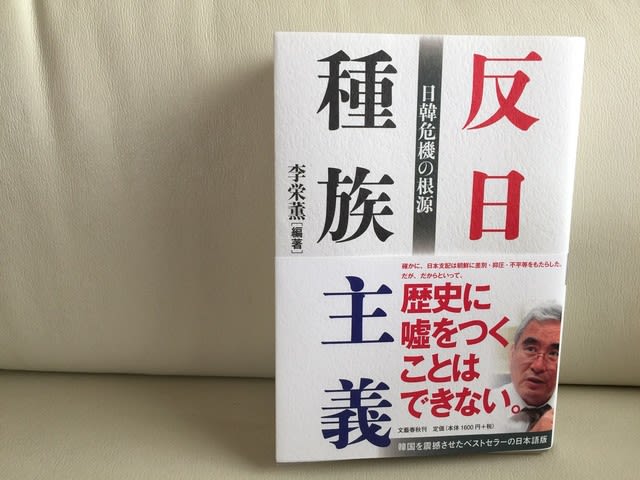
This essay, dated November 25, 2019, is based on Anti-Japan Tribalism.
It examines the origin of the claims of “forced mobilization” and “slave labor” concerning Korean laborers who went to Japan during the final years of the colonial period.
It argues that the theory of “forced mobilization of Koreans,” first advanced in 1965 by Park Kyung-sik of Korea University in Japan, emerged in the political context of opposing the normalization of Japan-South Korea relations and later became entrenched in South Korean society as a distortion of history.
November 25, 2019.
In 1965, Park Kyung-sik, a teacher at Korea University in Japan, which is affiliated with Chongryon, first made such a claim.
He agitated by saying, “Japanese imperialism cruelly exploited Koreans.”
The following is from Anti-Japan Tribalism, which a friend of mine, one of Japan’s foremost readers, bought and brought to me.
The myth of “forced mobilization.”
The starting point of historical distortion.
What I will describe from now on concerns the more than 730,000 Korean laborers who went to Japan and worked there during the war, for about six years from September 1939 to August 15, 1945, in the final period of colonial rule.
In academic circles, this is called “labor mobilization.”
South Korean researchers claim that most of the mobilized Koreans were forcibly taken away by Japanese officials, that is, that they were “forcibly mobilized.”
They also claim that they were harshly exploited like slaves in Japan, that is, that they were subjected to “slave labor.”
Their claim is that “military police or policemen came while people were sleeping at night or working in the fields, took them to Japan, made them do nothing but work until they nearly died, abused them like animals, and sent them back without paying them a single sen.”
In 1965, Park Kyung-sik, a teacher at Korea University in Japan, which is affiliated with Chongryon, first made such a claim.
He agitated by saying, “Japanese imperialism cruelly exploited Koreans.”
It was in order to block the Japan-South Korea normalization negotiations that were then underway.
That was because, once diplomatic relations between the two countries were normalized, North Korea would be encircled.
Such a claim is called the theory of forced abduction.
The title of Park Kyung-sik’s book is also Records of the Forced Abduction of Koreans.
This claim, which began there, has remained to this day as the most powerful accepted theory in academic circles.
It also exerted a tremendous influence on all of South Korea’s government agencies, educational institutions such as schools, the world of journalism, and the world of culture, and eventually became rooted as the common sense of our people.
However, this is a clear distortion of history.
The historical distortion called “forced mobilization” played a very important role in creating anti-Japan tribalism.
Anti-Japan tribalism also made this kind of historical distortion even more serious and spread it widely.
To be continued.