The Historical Distortion Embedded in the Term “Forced Conscription”
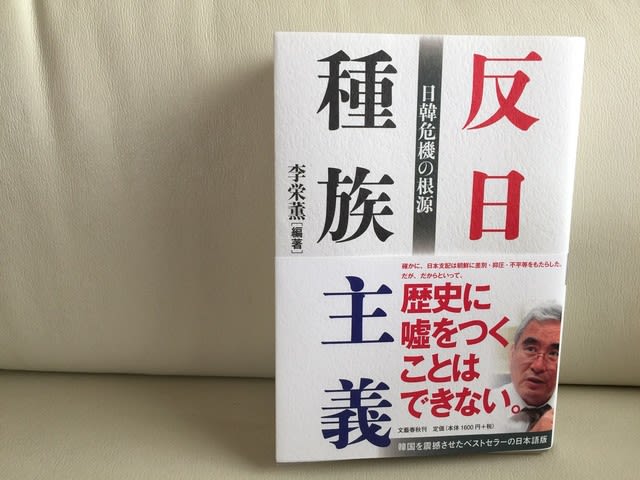
This essay, dated November 26, 2019, continues the discussion from Anti-Japan Tribalism.
It explains the differences among recruitment, government mediation, and conscription in the wartime labor mobilization of Koreans under Japanese rule, and argues that the term “forced conscription” was created to exaggerate and distort historical facts.
It also examines the problem with this expression as used in the 2018 South Korean Supreme Court ruling.
November 26, 2019.
What was created in this way was “forced conscription.”
Therefore, this term contains a skillful exaggeration and distortion of historical facts that cannot be overlooked with the excuse that it was merely a mistake.
The following is the continuation of the previous chapter.
The fiction of “forced conscription.”
Researchers speak of Japan’s labor mobilization by lumping it all together as “forced mobilization,” but among these, the most widely known method of mobilization is “conscription,” or, in the expression usually used by Koreans, “forced conscription.”
Regarding this forced conscription, on October 30, 2018, the Supreme Court handed down a ruling ordering Japanese companies to pay 100 million won in compensation to each Korean.
However, this ruling too is nonsense based on a clear distortion of history.
First, conscription was carried out for only a short period, about eight months, from September 1944 to around April 1945 at the longest.
After that, the U.S. military gained control of the Genkai Sea, making it impossible to transport Koreans to Japan.
For this reason, it is estimated that fewer than 100,000 Koreans went to Japan by conscription.
Conscription was a compulsory method of mobilization stipulated by law.
If one refused conscription, one was punished with imprisonment of up to one year or a fine of up to 100 yen.
Before conscription, there were the methods called “recruitment,” implemented from September 1939, and “government mediation,” begun in February 1942.
Recruitment and government mediation had no legal compulsion.
If a Korean did not respond, that was the end of the matter, and that Korean could not be punished.
In recruitment, a Korean expressed his intention to an employee of a company that had come from Japan by saying, “I will go,” and then went to Japan after undergoing screening.
In other words, it was left to the “voluntary choice” of Koreans.
Government mediation was somewhat different from recruitment, in that the Government-General of Korea used its administrative organization to support Koreans’ travel to Japan more actively.
Even when conscription was implemented, as before, many Koreans paid large sums of money to brokers and tried to smuggle themselves into Japan, entrusting their lives to small boats.
For the Korean youths of that time, Japan was one kind of “romance.”
Moreover, as had also been the case before conscription was implemented, many of the conscripted Koreans fled to places with better working conditions.
Because most Japanese young men had been taken to the battlefield, Japan faced a severe labor shortage.
The problem was especially serious in mines such as coal mines, and 64 percent of Koreans were assigned there.
However, most Koreans came from farming villages, feared underground labor in mines very much, and many fled to places such as construction sites.
In other words, when Korean labor mobilization is viewed as a whole, it was basically voluntary and not compulsory.
It cannot be called forced abduction.
At the time, there were not even such words as “forced abduction” or “forced conscription.”
In particular, it is necessary to know for what reason this term “forced conscription,” which appeared in the recent Supreme Court ruling, came into being.
First of all, the term forced conscription, and such a concept, could not originally exist.
That is because conscription itself is compulsory.
The term forced conscription is the same as the expression “the front in front of the station,” which we Koreans often use.
Since the word “front” is already included in “station front,” the later “front” is unnecessary.
Likewise, in the term forced conscription, the word “forced” is unnecessary, and conscription alone is sufficient.
Nevertheless, why have South Korean researchers, the government, the media, and civic groups clung to and used the term forced conscription from 1965 to the present?
Conscription was carried out only for several months before the war ended.
If that is clearly acknowledged, a troublesome problem arises for the historiography of anti-Japan tribalism.
That is because the more numerous labor movements from September 1939 to September 1944 would become voluntary movements by laborers.
In order to spread anti-Japanese sentiment widely, it was necessary to claim that even before conscription was implemented, Koreans were forcibly taken away regardless of their own will, and that all labor movement was forced by Japanese imperialism.
In other words, their true intention was to take the coercive nature of conscription back to 1939 and claim that all movement from that period onward was forced.
What was created in this way was “forced conscription.”
Therefore, this term contains a skillful exaggeration and distortion of historical facts that cannot be overlooked with the excuse that it was merely a mistake.
I simply cannot understand why people called researchers were able to carry out such a serious conceptual manipulation.
To be continued.