The Masterpieces of the Kyoto City KYOCERA Museum of Art and Nuclear Physicist Bunsaku Arakatsu—A Criticism of Narratives That Have Diminished Prewar Japan’s Culture, Science, and Technology
the author reflects on early Showa-period paintings and ceramics by Rokubei Kiyomizu displayed at the Kyoto City KYOCERA Museum of Art, as well as nuclear physicist Bunsaku Arakatsu, featured in NHK’s “Unleash the Power of the Atom: Nuclear Physicists at the Mercy of War,” and severely criticizes the narratives of the Asahi Shimbun, NHK, and so-called cultural figures that have diminished prewar Japan’s culture, science, and technology.
September 6, 2020
For the first time in six months, I took the subway from Higashiyama Sanjo to Okazaki.
The Kyoto Municipal Museum of Art, which I had frequently visited, had undergone extensive renovation work over a long period, coinciding with the sale of its naming rights to KYOCERA.
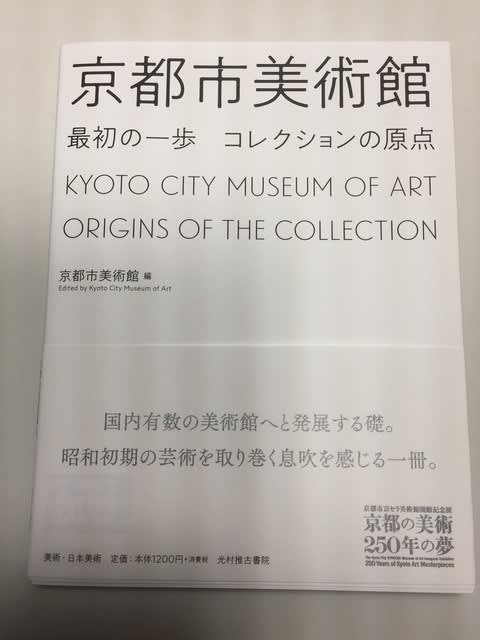
The following exhibition was being held to commemorate its completion.
Every time I saw the television commercial, I wanted to go.
I had been unable to go yesterday, and I thought that the effects of the typhoon might make it impossible today, but fortunately the weather was fine, so I headed for Kyoto before noon.
I regretted not having gone sooner.
If I had come earlier, I would undoubtedly have visited it many times.
“Magnificent!” is the only word for it.
Nearly all the exhibits—the paintings, the ceramics by Rokubei Kiyomizu, and the other works—were extraordinary.
Most of the paintings dated from Showa 9, or 1934.
Just how many geniuses and exceptionally talented people did Japan have?
These were painters whose talents were in no way inferior to those of Rubens, Velázquez, and others.
This exhibition also demonstrated just how utterly nonsensical the Asahi Shimbun and the so-called cultural figures who have agreed with it have been.
They have repeatedly asserted and charged that prewar Japan was entirely worthless, that the Japanese people before the war were nothing but a collection of utterly worthless people, and that they were all militarists.
Yet the numerous truly magnificent works demonstrated that it is they who should be subjected to criticism.
The Asahi Shimbun and the so-called cultural figures who have agreed with it are among the most repulsive people in Japanese history.
This is because it is no exaggeration whatsoever to say that they not only became agents of China and the Korean Peninsula but were traitors to their own country.
Recently, there was a special program that made me think, “This is precisely the kind of program NHK should originally be producing.”
It was titled “Unleash the Power of the Atom: Nuclear Physicists at the Mercy of War.”
Many people who watched this program must have learned for the first time that Japan had a scholar of international distinction named Bunsaku Arakatsu (1890–1973), who had been a professor in the Department of Physics at Kyoto University’s Faculty of Science.
Having learned of Bunsaku Arakatsu for the first time by watching this program, I felt intense anger toward those who speak of such things as opposition to nuclear power.
They are the lowest kind of people, denying the advancement of learning.
When one thinks about it, however, this should be no surprise.
This was Japan, the country that built the Zero fighter, the battleship Yamato, and the I-400-class submarine.
Japan was in fact an extraordinary country, and it is no exaggeration whatsoever to say that it possessed the world’s greatest technological capabilities.
The Asahi Shimbun, NHK, and the so-called cultural figures have diminished their own country, their own predecessors, and every aspect of those predecessors’ greatness.
It is no exaggeration whatsoever to say that there has not been anyone as unforgivable as they are throughout Japanese history.
The Asahi Shimbun, NHK, and the so-called cultural figures are truly the lowest of the low and the most despicable people in Japanese history.