What the Japanese Possess That Koreans Absolutely Do Not.Masayuki Takayama on the Decisive Difference in Restraint and Dignity.
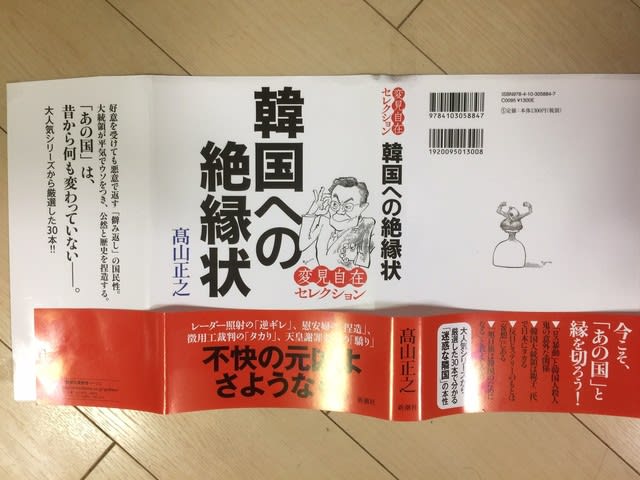
Originally published on April 29, 2019, this chapter draws on the latest book by Masayuki Takayama, whom the author regards as the one and only journalist of the postwar world, and examines the spiritual and cultural differences between the Japanese and Koreans.
By comparing them also with Russians and Chinese, it portrays both the reasons many Japanese feel deep aversion toward Korea and the lingering admiration for Japan that has long existed on the Korean side.
Above all, it argues that restraint, modesty, and a disciplined sense of comportment lie at the core of what makes the Japanese Japanese, and that the lack of such qualities marks a decisive difference.
2019-04-29
The Japanese value modesty.
Even when taking a Japanese name, one must keep that in mind.
Take, for example, Mizuho.
Because the Japanese are reverent, when they use it as a name they choose ateji such as Mizuho written with different characters.
If one lacks that kind of modesty, people will think, “Just as I thought.”
The following is from the latest book by Masayuki Takayama, the one and only journalist in the postwar world.
What Japanese Have That Koreans Absolutely Do Not
When one hears the name of a country, various thoughts come to mind.
For example, Russia once gave me the impression of barbarians who gouged out the eyes of retainers of the Matsumae domain, but these days I think of the Matryoshka Museum in Zagorsk.
The Russians, for all that, have a dutiful side, and in that museum they display matryoshka dolls with the explanation, “We made these in imitation of Hakone’s nested woodcraft.”
That is entirely different from the country that learned the know-how of the Shinkansen from Japan and yet brazenly insists that “everything is an original Chinese creation.”
So when one says China, what immediately comes to mind is that “pseudo-Shinkansen” hanging from an elevated track.
As for Korea… nothing comes to mind.
If I had to mention something, perhaps it would be the road from Seoul to Incheon that I traveled half a century ago.
It was rainy, and the windshield was quickly covered with splashed mud, robbing us of visibility.
There was no such handy thing as a windshield washer.
Every so often the driver would pull the car over to the side of the road and wipe the window.
One of those times, a clear stream was flowing beside us.
The riverbed was made of rock, with not a trace of gravel or mud.
The contrast between that purity and all the rest of the filth was striking.
Perhaps my impression stops there because afterward there was never a single good memory to replace it.
Even though Japan had gone to such trouble to make it into a decent country.
They raise an outcry over the comfort-women lie created by The Asahi Shimbun, even while knowing it is a lie.
And then, though there is no war at all, they start making a fuss by saying that the Rising Sun flag of the Japanese navy is a symbol of aggression.
It is exceedingly tiresome.
In a survey by South Korea’s JoongAng Ilbo, it was said that “14 percent of Japanese have a favorable impression of Korea.”
In other words, 86 percent dislike Korea.
When Weekly Diamond surveyed 5,000 Japanese businessmen, 79 percent said they disliked Korea, and likewise 77 percent answered that, in business terms too, Korea was something they “could do without.”
Imagine a map without the Korean Peninsula.
The Sea of Japan would instantly seem larger and would even feel refreshing.
Since the feelings of both Japan and Korea are almost in agreement on this point, perhaps they should simply stop associating with each other.
And yet, even while that is so, Koreans have long had a strong longing for the Japanese.
Take Masaaki Tachihara, for example.
After becoming a naturalized Japanese, this tall and slender man favored a Japanese style that looked as though he had stepped straight out of a period drama, wearing kimono informally and with long hair.
This is something I heard from the literary reporter Kōichirō Kaneda, who was close to him: it suited him even better than it did the Japanese themselves.
In one of Kaneda’s columns, he writes of visiting Tachihara’s house in Kamakura.
“While we spoke, his wife, dressed in Japanese clothing, sat upright on a round stool in the corner of the drawing room, waiting to be of service, and did not move in the slightest.”
There is no Japanese husband who would make his wife go that far.
Though perhaps Keiko, the wife of former Marshal Sugiyama Gen, might have suited such bearing.
On the day Japan surrendered, she returned to Tokyo from her evacuation site in Yamagata carrying mourning clothes.
Greeting Sugiyama, who was still alive, she said, “So you have not yet killed yourself?”
Pressed by his wife for three weeks, Sugiyama finally shot himself in the commander’s office.
After receiving the news by telephone, his wife changed into mourning dress, bound her knees with undergarments so that her hem would not become disordered, and then stabbed herself once in the chest with a dagger and killed herself.
Another man who, like Masaaki, wanted to become Japanese was Masaaki Arai.
He was considered promising after entering politics, but then allegations emerged that he had threatened a securities firm, and a Diet resolution authorizing his arrest was about to pass.
On the night before the arrest warrant was to be executed, he hanged himself in a hotel in Shinagawa.
His wife, who had gone home to fetch a change of clothes, returned and is said to have sensed that something was wrong from outside the room.
“In order to let him fulfill his resolve, I waited thirty minutes before opening the door.”
The truth is that a Japanese man properly finds his bearing only when his wife takes charge.
That is something people do not know as often as they should.
And one more thing.
The Japanese value modesty.
Even when taking a Japanese name, one must keep that in mind.
Take, for example, Mizuho.
Because the Japanese are reverent, when they use it as a name they choose ateji such as Mizuho written with different characters.
If one lacks that kind of modesty, people will think, “Just as I thought.”
(Issue dated February 25, 2016)