Asahi and South Korea Are Strikingly Alike — Masayuki Takayama on Korean Auxiliaries and the Reality of POW Surveillance
Drawing on a work by Masayuki Takayama, this chapter examines Korean auxiliaries in wartime, POW camps, postwar prosecutions for prisoner abuse, and the structural parallels he sees between South Korea and the Asahi Shimbun.
Referring to Laurens van der Post’s account and the testimony of the Chinese orphan Mitsu Toshiaki, it sharply highlights the realities of the Japanese military, Korean guards, and postwar narratives.
2019-04-28
They came to the battlefield because the number of prisoners was greater than expected.
For the Japanese military to be tied down by tens of thousands of POWs would also affect operations.
Thus, three thousand Koreans were mobilized as guard personnel.
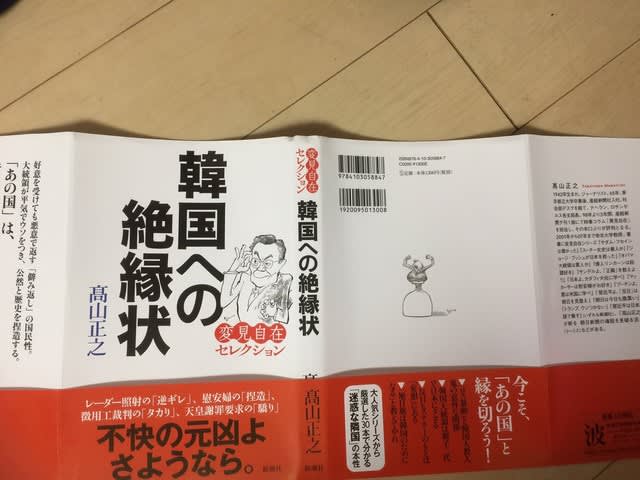
The following is from the latest book by Masayuki Takayama, the one and only journalist in the postwar world.
◎Chapter Four.
Asahi and South Korea Are So Alike.
There Were Also Such Admirable Men Among the Korean Military Auxiliaries.
Laurens van der Post was born to a Dutch-descended father who had settled in South Africa and a German mother.
Neither his father’s country nor his mother’s country thought very kindly of Japan.
That is why even now, when Japanese people carelessly try to enter those two countries, customs officials may pick a quarrel, saying things like, “You intend to sell the camera you are carrying, don’t you,” and then demand an outrageous sum of money.
If one refuses, it is confiscated.
Not long ago at Frankfurt Airport, they tried to extort 120 million yen from a famous violinist of Japanese descent over the Stradivarius he had brought for performance, claiming, “There is no certificate guaranteeing that it will not be resold.”
Given such lineage, it is highly likely that van der Post, too, looked at Japan with a somewhat distorted gaze.
He volunteered for the British Army in the last war, and when he arrived in Java via the Middle East, the Netherlands declared war on Japan.
Four months later, when a single Japanese battalion attacked a fortress defended by eighty thousand white men, they raised the white flag in only one week without offering any serious resistance.
It was the same in the Philippines and in Malaya.
Once the Filipino and Indian soldiers whom they had used as shields were defeated, the white men surrendered at once.
After that, they simply lay about in prisoner-of-war camps.
The Japanese military had to continue the war while feeding such people.
Van der Post felt no gratitude toward the Japanese military for that.
On the contrary, he loftily expressed impressions such as, “I doubt the sanity of the Japanese.”
However, as he showed in Journey into Russia, he did possess a proper eye for the subtleties of race.
In the work of his that was made into a film under the title Merry Christmas, Mr. Lawrence, he clearly distinguished between the Japanese sergeant Hara and the crude and brutal Korean auxiliary Kanemoto.
Kanemoto abuses prisoners, and in the end even rapes them by force.
The scene in which he is blamed for it, flies into a rage, and plunges a knife into a belly is reminiscent of present-day anti-Japanese demonstrations in South Korea.
Such a Korean also appears in The Seven-Year-Old Prisoner, written by a Chinese orphan.
The orphan’s Japanese name was Mitsu Toshiaki.
The surname Mitsu was taken from the 37th Hikari Division, and in 1943 he was picked up by the 7th Company of the 227th Unit of that division while it was in combat at Wangyemiao in Henan Province.
After that, he went from Guilin to Yuning together with the company, which participated in Operation Ichi-Go across the continent.
Then, having entered French Indochina, he met the end of the war there.
After the war he became the adopted son of an army doctor, grew up in Japan, and later ran a trading business while writing down his experiences in this book, and there are two particularly interesting descriptions in it.
One is the image of Chinese orphans in the same circumstances as himself being picked up by Japanese military units they encountered, being doted on, and moving from battlefront to battlefront with them.
One of them tells Toshiaki that Japan is already going to lose and that now is the time to cut and run, urging him to desert, and the scene was so characteristically Chinese that it made me laugh.
The other is the behavior of the Koreans who had Japanese names.
Once they had Japanese names, they suddenly began to throw their weight around before Chinese people, and at times even resorted to violence.
Toshiaki also confesses that he was abused as “a Chinese child with no parents.”
According to Ms. Meika of Monthly China, in Manchuria they called such people, who ran wild by borrowing Japan’s authority, “Kōraibōzu,” and disliked them greatly.
As van der Post introduced, Kōraibōzu were a known presence even on the battlefield.
They came to the battlefield because the number of prisoners was greater than expected.
For the Japanese military to be tied down by tens of thousands of POWs would also affect operations.
Thus, three thousand Koreans were mobilized as guard personnel.
Then came defeat.
When their status was reversed with that of the prisoners, their usual conduct also counted against them.
Many were prosecuted for abusing prisoners, and 129, or four percent, were found guilty.
Of these, twenty-three were executed.
The other day, the Asahi Shimbun reported that a former Korean auxiliary had sued the South Korean government.
I cannot quite understand the substance of the complaint, but the former auxiliary who brought the suit had apparently been accused of abusing prisoners immediately after the war and had long been confined in a death-row cell.
He must have incurred a great deal of resentment from white men.
Judging even from the Koreans of today, I feel I can understand that well, but even so, the death penalty would be too much.
Those white men committed all manner of wrongdoing in Asia, and then, the moment the Japanese military arrived, they surrendered at once.
If the Kōraibōzu taught a lesson in the harshness of reality to those who thought they had chosen an easy life as POWs, then that should rather be considered a useful lesson.
(2015年6月25日号)