The Rulers of the Korean Peninsula Become Authoritarian in Order to Hide Their Powerlessness and Irresponsibility.A Chapter for Understanding the True Nature of “Han.”
Originally published on October 11, 2018.
This chapter argues that the rulers of the Korean Peninsula have concealed their own powerlessness and irresponsibility through repression and cover-up, and that this process has led to the accumulation of what is called “han” among the people.
By examining the authoritarian tendencies shared by North and South Korea, the abuse of pardons, the weakness of the rule of law, and the glorification of political offenders, it seeks to reveal the essential nature of Korean Peninsula politics.
2019-04-16
The accumulation of bitterness and frustration harbored by a populace that has given up in the face of such rulers is what constitutes the true nature of what is called “han.”
This is a chapter I published on 2018-10-11 under the title:
“The rulers of the Korean Peninsula are extremely authoritarian, high-handed, and discriminatory in order to repress and conceal their own powerlessness and irresponsibility.”
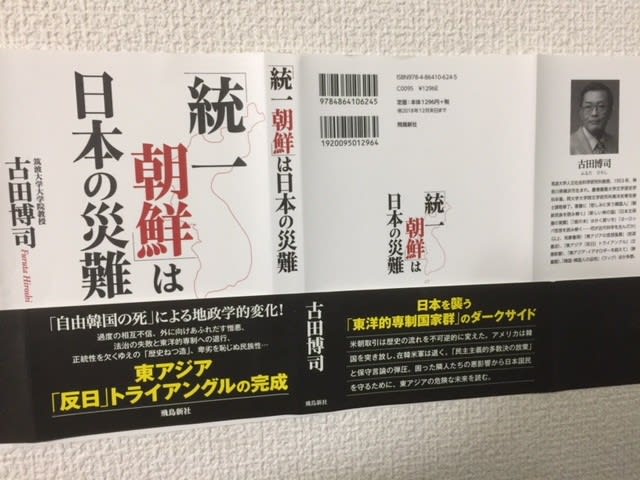
The following book by Professor Furuta Hiroshi is a historic masterpiece.
The truths revealed in this book, written with all the force of feeling by one of the world’s foremost experts on the Korean Peninsula, are things the world should come to know as quickly as possible.
I would be grateful if my poor English translation could instantly convey his meaning to the world without omission and become some help in setting Japan and the world right.
What follows is a continuation of the previous chapter.
The rulers of the Korean Peninsula are extremely authoritarian, high-handed, and discriminatory in order to repress and conceal their own powerlessness and irresponsibility.
There is no need at this late stage to explain North Korea’s hard-line and authoritarian politics, whether toward its own people or toward countries other than China, but in South Korea the DNA is the same.
The worst examples of this were Park’s father and daughter.
The accumulation of bitterness and frustration harbored by a populace that has given up in the face of such rulers is what constitutes the true nature of what is called “han.”
As we saw in the previous chapter, superiors are caught for corruption and bribery, yet they soon emerge from prison.
Because there are always pardons, in the Yi dynasty period this was called “ransha,” or indiscriminate pardons.
It is the same now.
In other words, there is far too little rule of law.
Even if one engages in destructive acts in the student movement, political offenders and ideological offenders are treated differently because they will become important figures in the future.
Even after being sentenced to death, they come out through pardon, and by repeating that sort of thing they acquire prestige and before long become opposition lawmakers.
Is this not of the same root as the mental structure of Kiyomi Tsujimoto, who, despite having been found guilty in the secretary salary fraud case, is still an opposition lawmaker?
A good example of this is Lee Seok-ki of the Unified Progressive Party (2011–2014), who was arrested on charges of plotting insurrection.