The Imposition of the “Idol” Called Korean History—National Legitimacy and the Danger of Anti-Japanese Education
Published on August 31, 2019.
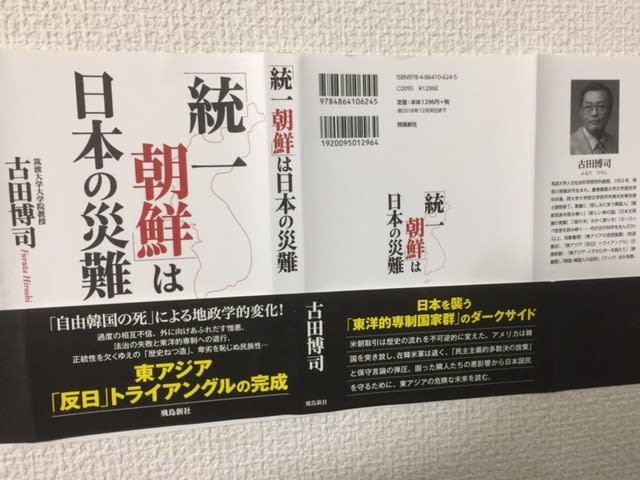
Based on an essay by Furuta Hiroshi, this chapter discusses North Korea’s myth of an “independence war,” South Korea’s claim regarding the Battle of Cheongsan-ri, the historical perception surrounding national legitimacy in the two Koreas, and the danger of terrorists and bombers being idolized as heroes through anti-Japanese education.
It criticizes the way Korean history is turned into an idol and imposed upon Japan.
Published on August 31, 2019.
There is a danger that young Koreans, who have been indoctrinated through anti-Japanese education to regard terrorists and bombers as heroes of the liberation movement, and whose minds have become like the IRA, may think, “I too want to become a hero,” and cross the sea carrying bombs.
South Korea has taken great pains to establish the lie that it won the Battle of Cheongsan-ri in order somehow to obtain legitimacy, but it was the Japanese army that remained on the battlefield.
This is a chapter published on October 9, 2018, under that title.
It is also a chapter that makes clear that Furuta Hiroshi is a true scholar, and therefore also a possessor of the finest humor, or a master of aphorism.
The following is a continuation of the previous chapter.
The Imposition of the “Idol” Called Korean History.
There were many politicians influenced by ideological operations within the Park Geun-hye administration and on the opposition side.
The present Moon Jae-in administration is itself a pro-North regime.
They claim, “North Korea’s late President Kim Il-sung fought an independence war.
Therefore, North Korea has the ‘legitimacy’ of the state.”
Their interpretation is, “Which side, North or South, has legitimacy?
Because it fought the independence war, North Korea has it!”
As I touched on a little before, even if one calls it an independence war, Kim Il-sung was nothing more than one officer within a Chinese army called the Northeast Anti-Japanese United Army.
He fought for about six years from 1934, and in the end, pursued by a Japanese punitive force, fled for his life into the Soviet Far East.
His only victory was the Battle of Pochonbo.
In 1937, it amounted only to surrounding a town called Pochonbo, setting fire to a lumber shop, breaking into the post office and stealing money, attacking the police box, killing ten policemen, and fleeing; yet in North Korea this is called the “Great Battle of Pochonbo” and treated as a battlefield site.
Even so, a certain degree of legitimacy is thereby secured.
On the other hand, South Korea has never fought the Japanese army in modern history.
The battle South Korea claims is only the single Battle of Cheongsan-ri in 1920, and the enemy was Korean bandits.
South Korea, which obtained independence in a windfall manner through Japan’s unconditional surrender and the advance of the U.S. military, has no national legitimacy to begin with.
Ordinary Koreans also know this, and they realize that, compared with the northern regime, there is a flaw in their own regime in terms of legitimacy.
South Korea has taken great pains to establish the lie that it won the Battle of Cheongsan-ri in order somehow to obtain legitimacy, but it was the Japanese army that remained on the battlefield.
There is no reason why the defeated side should remain on the battlefield.
What South Korea boasts of as heroes in order to maintain legitimacy are only bomb-throwing terrorists.
That it must turn bomb terrorists into heroes is the sorrow of present-day South Korea, and what I fear is the danger that young Koreans, who have been indoctrinated through anti-Japanese education to regard terrorists and bombers as heroes of the liberation movement, and whose minds have become like the IRA, may think, “I too want to become a hero,” and cross the sea carrying bombs.
Koreans create history in whatever way is convenient for themselves.
And they worship it like an idol and impose it upon Japan.