The Forces Seeking to Remove “Freedom”: South Korea’s Low-Grade Spiritual Culture Threatening Liberal Democracy
Published on November 27, 2019.
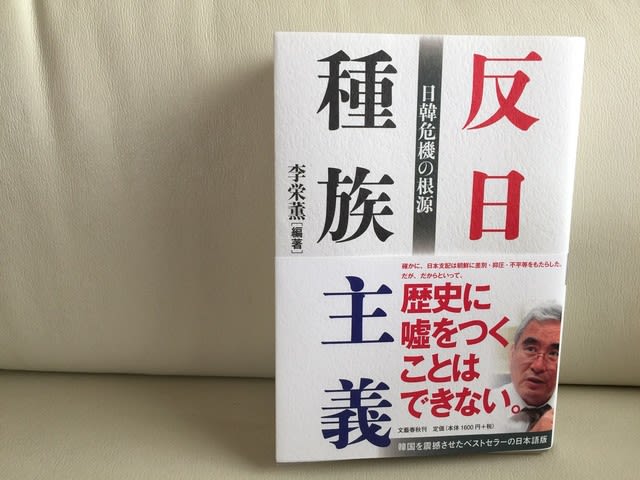
As a continuation of Lee Young-hoon’s epilogue to Anti-Japanese Tribalism, this article discusses the attempt by South Korea’s historical academia and the supporters of the Moon Jae-in administration to remove the word “freedom” from the constitution.
It clarifies the difference between liberal democracy and “people’s democracy” or “new democracy,” and argues that political forces hostile to freedom are endangering South Korea’s liberal democratic order.
November 27, 2019
Sadly, I cannot wipe away the thought that this country’s liberal democratic system is a luxury beyond the capacity of this country’s low-grade spiritual culture to manage.
The following is the continuation of the epilogue.
Unknown foreigners.
Several years ago, the historical academic world denied the commonly accepted view that this country’s political system is “liberal democracy,” and argued that the two characters meaning “freedom” had to be deleted.
In 2017, President Moon Jae-in, who took power through the Candlelight Revolution, and his supporting forces prepared a constitutional amendment proposal to delete “freedom” from the constitution.
They withdrew it because public opinion fiercely opposed it, but they do not conceal their intention to promote it again if conditions are arranged.
They are hostile to “freedom.”
They regard freedom as the shallow selfishness of the individual.
“The enlightenment forces at the end of the old Korean Empire, before the Japan–Korea annexation, who accepted the idea of freedom, later transformed into pro-Japanese collaborators, and after liberation they clung to the new imperialist country, the United States, in order to protect their vested interests.
The country created in that way is the Republic of Korea.
Those who still speak of freedom and the like today are shallow individualists, and descendants of the pro-American and pro-Japanese.”
Roughly speaking, this is the current ruling forces’ understanding of freedom.
I am a member of various history-related academic societies.
I have published papers in many academic journals.
Historians were my colleagues.
My relationship with the ruling forces was also the same as theirs.
In 1971, I resisted President Park Chung-hee’s suppression of universities and was expelled from university.
I am a holder of membership in the so-called “democratization forces.”
I have understood their principles and claims from within.
However, when I encountered the claim that “freedom” should be deleted, I clearly awakened.
They are not my colleagues, but unknown foreigners.
No, they are terrifying heretics.
One cannot form a republic with heretics who deny and blaspheme the souls of other people.
It is said that there is no word more misunderstood and misused than “democracy.”
Some point out that it was a great mistake originally to translate democracy as “minshu-shugi,” or “democratic-ism.”
They say that, just as its opposite, autocracy, was translated as “despotic politics,” democracy should have been translated as “democratic politics” or “democratic system.”
Democracy merely functionally represents the political process by which the will of a group is decided according to the principle of majority rule, or by which a power structure is formed.
For that reason, even in the constitution of the United States, where democracy is most highly developed in the world, there are no words such as “democratic” or “democracy.”
The same is true when one looks at the constitution of neighboring Japan.
In contrast, the fact that words such as “democratic” and “liberal democratic” appear many times in this country’s constitution is actually because people did not really understand what democracy was.
Democracy is not a political philosophy that integrates individuals with different interests into an ordered body called the state, and further leads them to prosperity and peace.
The great idea at that level is precisely “freedom.”
Therefore, there is no true democracy toward which we should orient ourselves other than liberal democracy.
Political scientists classify democracy according to the form of power into presidential democracy, parliamentary democracy, social democracy, participatory democracy, authoritarianism, and so on.
However, all of these are derived from liberal democracy.
Those who argue for deleting “freedom” claim that the path we should take is social democracy like that of Germany or the Nordic countries, and that liberal democracy is unnecessary.
They do not understand how strongly liberal democratic the political systems of today’s Germany and Nordic countries are.
They have mistaken the differences in government and market forms that arise from cultural differences among countries for differences in the idea that integrates human beings and society.
Looking back on world history, were there not forces that falsely claimed to be democratic?
They were the communist forces that deceived people by calling the dictatorship of the proletarian class democracy.
They called the political system led by the working classes of workers and peasants “people’s democracy” or “new democracy.”
The fact that today’s hereditary monarchical regime in North Korea calls itself the “Democratic People’s Republic of Korea” can be said to be a good example.
The same is true of China, which is ruled by the Communist Party.
According to Mao Zedong Thought, China’s national ideology, today’s Chinese political system is new democracy.
Therefore, in history, broadly speaking, there have only been liberal democracy and people’s democracy or new democracy.
If the former is true democracy, the latter is false democracy.
Such a confrontation between truth and falsehood has unfolded as an exemplary case in our Korean history.
If the liberal democracy of the Republic of Korea is true democracy, North Korea’s people’s democracy is false democracy.
And yet, this country’s historical academic world and the current ruling forces argued that the two characters meaning “freedom” should be deleted from the “liberal democratic order” clearly stated in our constitution.
They are so ignorant that they do not know what democracy from which freedom has fallen away means.
This may be a good-faith interpretation.
Some of them think that only a democracy from which “freedom” has been deleted can be unified with North Korea’s people’s democracy, which they believe has inherited the orthodoxy of national history.
Judging from the words and actions of the current ruling forces and their supporting forces, there is a strong possibility that this supposition is true.
How did this country come to such a situation?
Sadly, I cannot wipe away the thought that this country’s liberal democratic system is a luxury beyond the capacity of this country’s low-grade spiritual culture to manage.
To be continued.