The “Great White Professors” Featured by Asahi Are Mostly Fraudulent — Colonial Rule and the Truth of Japan’s Governance
Published on January 17, 2020.
Drawing from Masayuki Takayama’s work, this article criticizes the views on Japan and colonial rule advanced by Western academics whom the Asahi Shimbun elevates. Using Noah Smith and Barak Kushner as examples, it attacks arguments that conflate Western colonial exploitation with Japan’s rule, as well as Asahi’s worship of white authority and its accommodation of China-leaning historical narratives.
January 17, 2020
Japan’s poor, on the other hand, are astonishing. They can receive welfare payments higher than what they would earn by working honestly, and nationality is not questioned. In the United States, Obamacare has run into difficulties, but in Japan, the poor receive health insurance even without paying premiums.
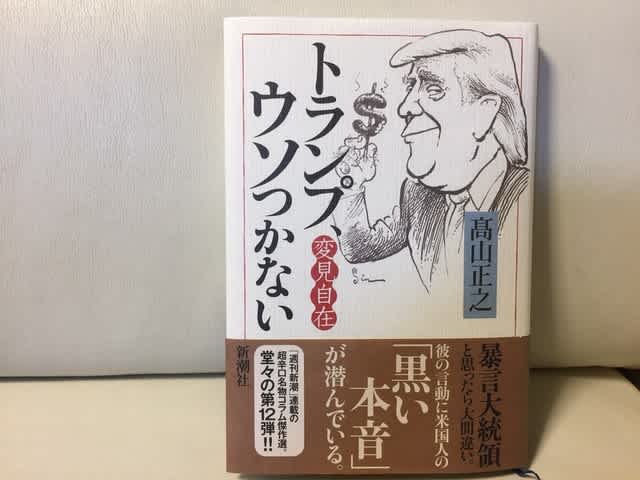
The following is from the work of Masayuki Takayama listed below.
This chapter, too, proves that he is the one and only journalist in the postwar world.
The “Great White Professors” Featured by Asahi Are Mostly Fraudulent
Two hours by train from Manhattan, on a rustic seaside, stands Stony Brook University.
It is one of the State University of New York campuses, but it has only a short history and is known by few.
However, Professor Noah Smith, who teaches economics there, is somewhat known, and he has often issued startling aphorisms about Japan.
Recently, he analyzed that the gap between rich and poor in Japan is severe and now exceeds that of the United States.
This white associate professor does not know that while Japan has mountains of foreign billionaires such as Ghosn and Masayoshi Son, the only Japanese billionaire is, at most, Yoichi Masuzoe.
Even Masuzoe, after being billed for the public car he had been freely riding around in, will soon be removed from the billionaire category.
Japan’s poor, on the other hand, are astonishing.
They can receive welfare payments higher than what they would earn by working honestly, and nationality is not questioned.
In the United States, Obamacare has run into difficulties, but in Japan, the poor receive health insurance even without paying premiums.
Foreign permanent residents such as Koreans in Japan, who do not even pay taxes, can receive it for free.
Moreover, even costly medical treatments such as dialysis, which in advanced medical countries are subject to age limits at sixty, have no such limits in Japan.
Japan’s poor are the richest poor people in the world.
In Japan, “the weak,” such as Koreans in Japan and the elderly, wield influence, waste national funds, live off the rich, and all become poor together.
Professor Smith does not know that reality.
This ignorant white associate professor has now said that “the theory that white people became rich by exploiting colonies, while the colonies remained poor, is entirely mistaken.”
Colonial rule was brutal.
For example, “Britain destroyed wheat fields in India and forced the planting of opium. As a result, it brought about great famines again and again, and India wasted away and became even poorer.”
Britain, meanwhile, used the wealth it had seized as capital to “push forward industrialization, invent the steam engine, mechanize looms, and, as a result, obtain even greater wealth.”
He says there are also examples of “colonies that suffered such terrible treatment but are now extremely wealthy countries.”
And where are they?
“Korea, Taiwan, and Singapore,” he says.
What nerve.
Neither Korea nor Taiwan was a “colony plundered by white people,” as Professor Smith defines it.
They were ruled by Japan.
There, far from exploiting them, the suzerain state built schools, improved medical conditions, developed infrastructure, and encouraged growth.
“Korea, which was still in ancient times” (Professor Furuta Hiroshi of the University of Tsukuba Graduate School), was able to leap at once into becoming a modern nation thanks to Japan’s thirty-six years of rule.
Singapore, too, awakened under Japanese rule and was able to become independent by taking Japan as its model.
What Professor Smith should have cited here is “Central Africa,” which he also mentioned in his column.
That region has abundant underground resources such as gold, tungsten, and uranium, and cash crops such as coffee also flourished there.
Belgium seized the resources of a country that should never have become poor, then set its Tutsi and Hutu inhabitants against one another, and bloody killings continue even now.
It is the finest example of colonial rule destroying both a country and its people.
To conceal their own colonial management, shift the story to territories ruled by Japan, and thereby justify their own colonial rule is the pitch of a swindler.
Ono Hirohito, former chief editorial writer of the Asahi Shimbun, reverently took up a similar white professor, Barak Kushner.
This American-born associate professor at the University of Cambridge discussed postwar China and said that Chiang Kai-shek was “fair” and that Mao Zedong “showed a tolerance that understood morality.”
But Chiang Kai-shek was a man who flattered the white powers and betrayed Asia.
Mao Zedong was a man who said that the dead from starvation would make good fertilizer for the fields.
Both had arrogance and ostentation as their defining features, and on the extension of that line lie today’s invasions of Tibet and the Uyghurs, as well as the seizure of the Spratly Islands.
Yet this professor refuses to look at such reality.
He makes a strange accusation that, toward good China, Japan was cold, and that Japan “pays no attention” even to the fate of collaborators with Japanese rule, the hanjian.
In every phrase, there seeps the arrogance that white people are always right and that we will judge you fairly, while Ono simply accommodates him and nods along.
Incidentally, he came to Japan as an English-conversation teacher and wrote Slurp on ramen culture.
Between the lines, arrogance and contempt for Japan seep out.
Perhaps China saw that in him, for he was given the name Gu Ruopeng and now serves as a propagandist for Beijing.
Asahi is free to worship white people.
But that does not mean it should present worthless white people as if they were something admirable.
August 25, 2016 issue.