The Difference Between Confucian States and Buddhist States—The Astonishing Cultural Background Behind the Low Status of Doctors in China
Originally published on February 14, 2020.
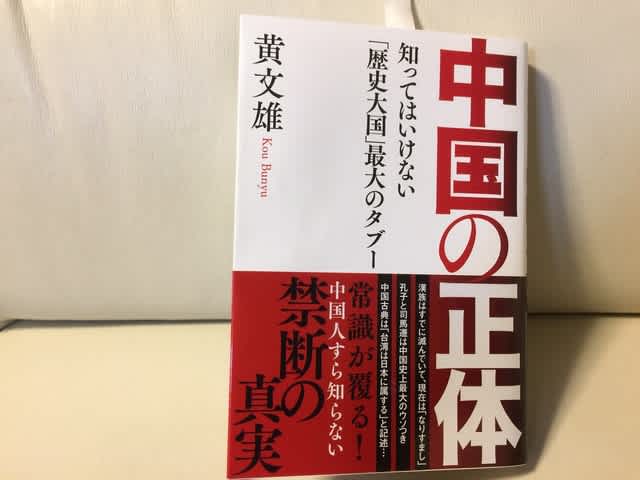
This article introduces Kō Bun’yū’s analysis of China and discusses the differences in values between Confucian states and Buddhist states, the cultural impact of the imperial examination system, and the historical contempt for music, dance, and medicine in Chinese society.
It highlights the striking comparative-cultural fact that while high-achieving students usually enter medical schools in Japan and Taiwan, doctors have traditionally been looked down upon in China.
February 14, 2020
Doctors become an even more extreme symbol of comparative culture.
For example, in Japan and Taiwan, students with good grades usually go on to medical schools at universities, but in the Chinese world, the situation is completely the opposite.
As I have mentioned before, Kō Bun’yū is one of the world’s foremost scholars with deep knowledge of China.
In the following chapter, astonishing facts that most Japanese people have never known are revealed.
The passages marked with ~ and the emphases within the text are mine.
The Difference Between Confucian States and Buddhist States
In recent years, “the sharing of values” has often been discussed as part of Japan’s foreign policy.
This “sharing of values” seems to mean an attitude of connecting with countries that share common systems, national forms, and political forms, such as rule “by law, not by force,” and “liberal democracy” rather than “dictatorial despotism.”
Human beings differ in mentality and behavior according to their respective cultural climates, mainly through styles of life such as “clothing, food, and housing.”
Even within the same Chinese world, before Confucius in ancient times and up to the Spring and Autumn period, there were also rites, arts, and techniques such as arithmetic.
However, after Confucianism made “writing the great affair of governing the state,” the social climate came to value poetry, lyrics, and prose, while song and dance were increasingly despised.
Not only singers and dancing girls, but even doctors who practiced medicine came to be regarded as the lowest kind of people.
Especially from the Song dynasty onward, when the imperial examination system was fully implemented for the appointment of officials, only men of letters had the possibility of entering official service.
As music and dance declined and written characters and prose came to be valued, even the values of society changed.
It was only from the age of television that musicians, singers, and actors became stars.
Doctors become an even more extreme symbol of comparative culture.
For example, in Japan and Taiwan, students with good grades usually go on to medical schools at universities, but in the Chinese world, the situation is completely the opposite.
Students with poor grades become doctors.
Therefore, even today in China, doctors are looked down upon.
For example, in China, violent acts by patients against doctors occur frequently and are called “yinao” or “yishang.”
When I read this passage, I remembered an incident some years ago in which a middle-aged Chinese woman living in Japan suddenly attacked her regular doctor with a knife.
At the time, I merely thought, what kind of people are the Chinese?
NHK has never reported even a single word about this reality in China.
Because the number of such incidents reaches tens of thousands every year, the Chinese government even designated August 19 every year as “Chinese Doctors’ Day” in 2018 and called on people to respect doctors.
Moreover, according to a 2012 survey, the average starting salary of clinical doctors was 2,339 yuan per month, while the average starting salary of new university graduates in China was 3,051 yuan per month, with doctors and nurses at the lowest level.
This was reported by China Net on October 8, 2013.
Confucianism and Taoism are extremely secular and seek only worldly benefits.
That is why Taoism seeks longevity without aging and techniques for becoming an immortal.
The Chinese are a people of “the vulgar.”
There was also a period when Buddhism was transmitted from India to China and became popular.
However, in present-day China, Buddhism is hardly believed in at all.
During the several hundred years of the Six Dynasties period, Buddhism transmitted from India had a major influence on China, but after the subsequent “persecution of Buddhism under the Three Wus and One Zong,” Chinese Buddhism fell into a state close to extinction.
The rest is omitted.