The Reality of South Korea’s Hidden Baby Export: Inequality and the Dark Side of International Adoption
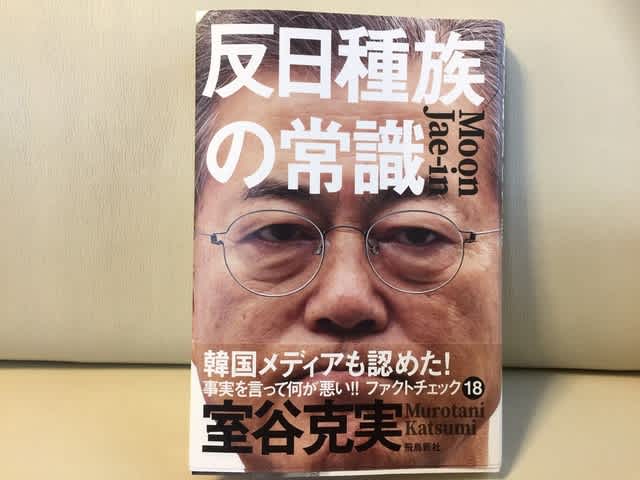
This article continues the discussion of South Korea’s overseas adoption problem based on Katsumi Murotani’s book The Common Sense of the Anti-Japanese Tribe.
It examines the poverty gap, single mothers, abandoned children, and the international adoption system behind South Korea’s export of babies.
Although South Korea is an OECD member and has the economic capacity to raise orphaned children domestically, it has not ratified the Hague Convention on intercountry adoption.
This chapter questions the contradictions of South Korean society and the responsibility of Japanese media, opposition politicians, human-rights lawyers, and civic groups that have concealed this reality.
March 17, 2020
Newspaper companies such as the Asahi Shimbun, television media companies such as NHK, opposition-party political operatives, so-called human-rights lawyers, and civic groups that have been in league with South Korea have continued to hide the reality of South Korea revealed in this true book.
The following is from The Common Sense of the Anti-Japanese Tribe, a book by Katsumi Murotani, a genuine journalist and one of the foremost experts on South Korea.
It is a book that must be read not only by the Japanese people but by people throughout the world.
It is a book that reveals the reality of South Korea, a reality that people throughout the world, like me, are learning for the first time.
Countries of bottomless evil and plausible lies also lie about their own realities.
In other words, they conceal the truth about themselves.
Newspaper companies such as the Asahi Shimbun, television media companies such as NHK, opposition-party political operatives, so-called human-rights lawyers, and civic groups that have been in league with South Korea have continued to hide the reality of South Korea revealed in this true book.
The following is the continuation of the previous chapter.
A tremendous gap between rich and poor.
Then, what kind of people are the suppliers of the “raw materials for export”?
“Among children who go overseas as adoptees, the largest number are children of single mothers, that is, unmarried mothers, accounting for 87 percent.
The remaining 13 percent are children whose upbringing has become difficult due to their parents’ divorce and other reasons.”
This is from an article in the Chosun Ilbo dated December 25, 2011.
There is a Hague Convention concerning intercountry adoption.
The purpose of this convention is to reduce intercountry adoption as much as possible.
Among wealthy people in Europe and America, it seems that accepting and raising a non-white baby as an adopted child is also a kind of status symbol.
There may also be cases in which people sincerely wish to take in a poor Asian orphan, even an orphan with a disability, and raise that child well, and then actually put that wish into practice.
However, it seems that there are extremely many cases in which non-white adopted children are exposed to discrimination within white society.
For that reason, the Hague Convention sets domestic care as the principle for orphans, and lists intercountry adoption as a “last resort” only when it is absolutely impossible to raise the child domestically.
Since the 1980s, South Korea has clearly developed into a middle-income country.
In 1996, it also joined the Organization for Economic Cooperation and Development, the OECD, which can be called a “club of wealthy countries.”
Of course, there is a tremendous gap between rich and poor within South Korea.
For that reason, there are also abandoned children due to poverty.
In reality, however, there seem to be more abandoned children because the birth was “unwanted,” but there are also families within South Korea that accept adopted children.
At the very least, the operating costs of orphanages could be found from the government budget as much as necessary.
Given the scale of South Korea’s economy, a situation in which “it is absolutely impossible to raise the child domestically” simply cannot occur.
Yet South Korea has not joined this convention.
In fact, Japan has not joined it either.
But that is because Japan’s record of intercountry adoption, both sending out and receiving children, is almost zero, and the basic background is different from that of South Korea.
Still, there may well be people in South Korea who believe that their country has joined the convention.
That is because the JoongAng Ilbo, on May 25, 2013, published a grossly erroneous report saying, “South Korea joins the Hague Convention on Intercountry Adoption.”
In reality, the Minister of Health and Welfare merely “signed the convention” at The Hague.
In other words, it was nothing more than confirmation that the documents had been received.
Even though a “motion requesting ratification” was passed in the South Korean National Assembly, the convention has not been ratified.
The necessary related domestic laws have not been enacted at all.
In spite of such a situation, South Korea served as chair of the United Nations Committee on the Rights of the Child, which has the role of monitoring the implementation of the Hague Convention.
One can only be utterly astonished by such shamelessness.
This article continues.