Postwar Dismantling and Contempt for Non-White Nations — A Critique of the UN and Allied Policy
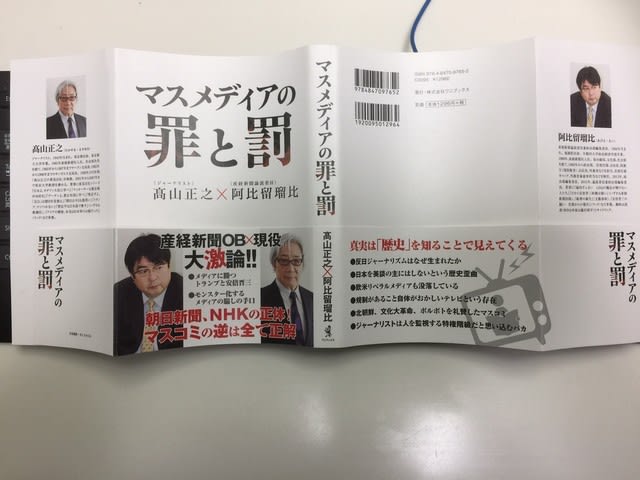
This article discusses postwar dismantling policies imposed on Japan and explores attitudes of contempt toward non-white, non-Christian nations. Drawing on a dialogue between Masayuki Takayama and Rui Abiru, it reflects on the UN, postwar restructuring, and the long-term impact on Japan’s industrial base.
2019-02-17.
Readers know that I have continued to denounce at the top of my voice what I regard as the UN’s repeated confrontational attitude toward Japan.
The following is an excerpt from page 73.
The sections marked with asterisks are my own remarks.
Contempt toward non-white and non-Christian nations.
Abiru.
If you look at old foreign documents, they actually wrote things like “Japanese eyes are distorted, so they are unsuitable to be pilots.”
Takayama.
They even said Japanese suffer from night blindness.
Or that because they are carried on their mothers’ backs as infants, their vestibular systems are defective and they cannot fly aircraft.
Abiru.
Scholars overseas wrote such things without hesitation.
Takayama.
It is much the same today.
Claims that Japanese women have low status or that there is no freedom of the press reflect the height of contempt toward non-white and non-Christian nations.
Readers know that I have continued to denounce what I regard as the UN’s repeated posture toward Japan.
It is hardly an exaggeration to say there is no organization as foolish and ignoble as the United Nations.
Even when prewar Japan was called a militaristic power, despite Western defeat in the Russo-Japanese War, many dismissed it as a fluke, saying it was only because Russia was incompetent.
The notion attributed to Knox that “Japan would fall within three months at most” was regarded as highly credible.
Abiru.
That is why Churchill never imagined that Britain’s proud battleships, the Prince of Wales and Repulse, would be sunk in December 1941 off Malaya.
It was a tremendous shock.
Takayama.
Moreover, they never imagined that aircraft could sink battleships.
When the war unfolded, instead of defeating Japan easily, they themselves suffered devastating blows.
So when deciding what to do with postwar Japan, the approach resembled what Rome did to Carthage, namely dismantling the nation.
There is the word montage.
It means assembling pieces together.
Add “de” and you get demontage.
It means dismantling.
In other words, dismantling Japan’s industrial capacity.
They did the same to Germany.
They stripped territories from Alsace-Lorraine to the Ruhr.
In Japan’s case, under the direction of Edwin Pauley of the Reparations Mission, the aircraft industry was abolished entirely, and shipbuilding, steel production, and aluminum refining plants were dismantled and either dumped into the sea or transported to Korea and China.
It was truly the dismantling of industrial Japan.
There were even plans eventually to reduce Japan to light industry capable of producing little more than pots and pans.
Abiru.
The fact that Japan still does not properly possess its own fighter aircraft stems from the thorough dismantling of its aviation industry.
Takayama.
The impact of that was enormous.