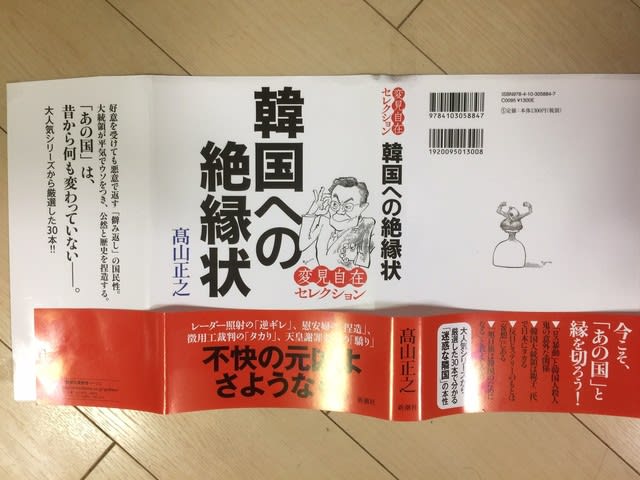
The Asahi Shimbun Makes Noise Only When It Can Inflame Ethnic Emotion.Masayuki Takayama Exposes the Fraud of Its Comfort Women Narrative and Anti-American Reporting.
Originally published on April 30, 2019, this chapter draws on a work by Masayuki Takayama, whom the author regards as the one and only journalist of the postwar world, and criticizes the structural deceit common to The Asahi Shimbun’s comfort women reporting, its constitutional arguments, and its reporting on incidents involving U.S. personnel in Okinawa.
It argues that even after leaving Seiji Yoshida’s false testimony uncorrected for nearly thirty years and allowing derivative fabrications to spread, The Asahi Shimbun has still not abandoned its habit of inflaming ethnic emotion.
The piece further exposes the paper’s double standard, defending the imposed Constitution on the one hand while exploiting ethnic narratives to amplify anti-American and anti-Japan sentiment on the other, and sharply indicts the paper’s fundamental editorial character.
2019-04-30
In Okinawa, sixty rapes occur each year.
Yet the police do not even announce them.
In this case too, if the offender who kindly put an intoxicated person to bed had been Japanese, one wonders whether the police would even have moved.
What follows is from the latest work by Masayuki Takayama, the one and only journalist in the postwar world.
Asahi and South Korea are this much alike.
It was only after fully thirty years had passed that The Asahi Shimbun finally admitted that the story, “Seiji Yoshida rounded up Korean women on Jeju Island and turned them into comfort women,” had been a complete lie.
During that time, Yayori Matsui changed Jeju Island to Busan and wrote a fabricated article saying, “A Japanese police officer abducted Korean women.”
It was the first Yoshida Seiji spin-off work.
Takashi Uemura set his story in Seoul and wrote about kisaeng and Japanese servicemen.
That was spin-off number two.
In fact, it was neither newspapers nor television that pointed out the accumulation of such lies.
It was Shinzo Abe, just before becoming prime minister, who denounced before a room full of reporters that “The Asahi Shimbun is spreading the story of a fraud named Seiji Yoshida.”
The media had monopolized politics.
Soichiro Tahara said he had taken the heads of several prime ministers.
Asahi too said, “We will conduct Abe’s funeral.”
Challenged by that prime minister, Asahi desperately tried to think up some excuse, any excuse at all, but it failed.
Its president, Kimura Iryo, ended up offering his own head.
The man who succeeded him, Masataka Watanabe, came from the Osaka social affairs department that had given birth to the comfort women falsehoods.
Harufumi Kiyota, who dug up Seiji Yoshida, was his senior, and Uemura was his contemporary.
Perhaps he grew tired of editing, for he moved into labor affairs.
He described Asahi by saying, “The reds write it, the yakuza sell it, and fools read it.”
He was in charge of overseeing those yakuza.
When he became president, he promised to reform both the “mindset” that did not mind lies and the “methods” that did not even verify facts, and pledged “fairness without bias” and “the humility to include diverse opinions.”
But what did the reds on the writing side do with that promise.
For example, editorial writer Hiroto Ono ridiculed, in the November 3 edition marking the promulgation of the MacArthur Constitution, “those who dislike that Constitution because it was imposed by America.”
He dismissed as a mere “illusion” the idea that the time might come when people would feel uneasy about leaving that Constitution as it is and might want a Constitution written by Japanese themselves.
People have various opinions.
Yet the writers did not care in the least about the promise made by the overseer of the yakuza that the future Asahi would accept them.
Adding amusement to the claim that an imposed Constitution is perfectly fine, Asahi’s house constitutional scholar, Yasuo Hasebe, also joined in.
“If you dislike it because America imposed it, then was not the Meiji Constitution imposed as well,” he said.
One is startled and wonders whether Perry imposed it, but that is not what he means.
He means, “Did not the Meiji government impose it upon the people, the sovereign holders of the power to make a Constitution.”
This is not Yoshihiko Amino.
Expressions like “sovereign people” do not sit naturally in Japanese history.
Even granting a hundred steps and calling it imposition, the Meiji government was run by Japanese.
That is on an entirely different level from MacArthur’s imposition.
Since Hasebe apparently cannot understand that difference, let us take as an example the incident of the assault on an intoxicated woman that occurred this March at a business hotel in Naha.
The following is Asahi’s article.
“A female company employee in her forties, who had visited Okinawa for sightseeing with acquaintances, drank the night before and then fell asleep in the corridor of her hotel.
When she awoke, she was in the bed of an unknown man.
She had not been violated.
She escaped, reported it to the police, and the unknown man was urgently arrested on suspicion of quasi-rape.”
In Okinawa, sixty rapes occur each year.
Yet the police do not even announce them.
In this case too, if the offender who kindly put an intoxicated person to bed had been Japanese, one wonders whether the police would even have moved.
The circumstances were also ambiguous, and in fact the offender was arrested while sleeping in his room.
The reason it was turned into a major article as above was that the offender was an American.
Asahi does not make noise when the offender is Japanese, but it made noise because he was American.
It appealed to ethnic emotion with the idea that “an American almost violated a Japanese woman.”
The reason The Asahi Shimbun wrote so prominently about Seiji Yoshida’s lie was that the comfort women in the story were set up as “Koreans.”
If the comfort women had been Japanese, it would not even have become material.
It was only because they created the story, “Japanese abducted Korean women.
They made them comfort women and raped them on the battlefield,” that the comfort women issue became material for such a great uproar.
The Asahi Shimbun has always treasured ethnic themes and made them its bread and butter.
Yet when it comes to the Constitution alone, it says there is no problem even if Americans wrote it.
Perhaps this is the stupidity of Asahi, which cannot quite manage to become a fully nationalist newspaper.
(2016年12月1日号)