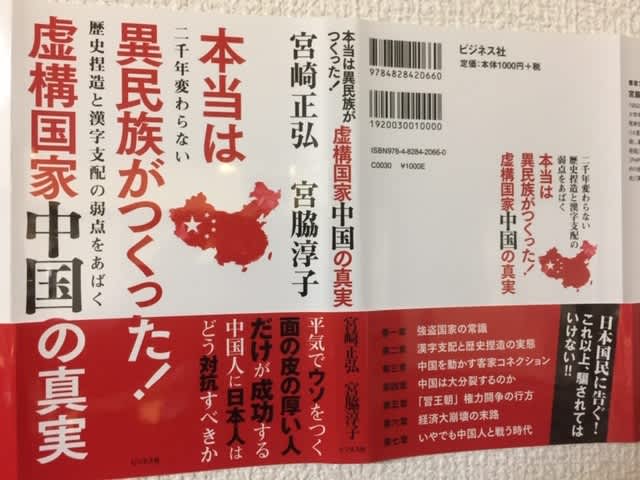
Junko Miyawaki’s Scholarship Illuminates the False Images of Chinese History — An Essential Dialogue on the Revival of Confucius, Yuan Shikai, and the Hakka —
This piece, based on a text dated April 19, 2019, introduces the scholarship of Junko Miyawaki and the essential truths of Chinese and East Asian history revealed through her work.
It explores why Confucius was repeatedly “revived” in modern China, challenges common assumptions about Yuan Shikai and Sun Yat-sen, and examines the historical position of the Hakka, thereby breaking through the superficial understanding of China often held in Japan.
It shows why the learning of Junko Miyawaki, trained at Ise High School, Kyoto University, and the Graduate School of Osaka University, is of world-class importance for interpreting contemporary China, making this truly essential reading for the Japanese people.
2019-04-19
The alumni of Ise High School, Kyoto University, and the Graduate School of Osaka University ought to take great pride in the fact that the scholarship of Junko Miyawaki, who refined her study of Oriental history there, is among the finest in the world.
I believe it was Masayuki Takayama who introduced me to the existence of Junko Miyawaki.
The alumni of Ise High School, Kyoto University, and the Graduate School of Osaka University ought to take great pride in the fact that the scholarship of Junko Miyawaki, who refined her study of Oriental history there, is among the finest in the world.
The following book is, truly, one that every citizen of Japan must read.
China’s Anxiety: It Has Nothing but Confucius
Miyazaki
When the country falls into disorder, Confucius is revived in China as a means of overcoming crisis.
Miyawaki
Confucius has been revived three times in the twentieth century alone.
They were Yuan Shikai, who opposed Sun Yat-sen, who at the time of the founding of the Republic of China was strongly connected to foreign countries such as Japan and infatuated with the West, Chiang Kai-shek immediately after the collapse of the First United Front between the Nationalists and the Communists, and Xi Jinping today.
First, there was Yuan Shikai, who had been a minister of the Qing dynasty.
In 1911 the Xinhai Revolution broke out, and in the following year, 1912, the Republic of China was established in the south and Sun Yat-sen was chosen as provisional president.
Sun Yat-sen yielded the position of president to Yuan Shikai, but then launched the Second Revolution.
At that time, Yuan Shikai, in order to counter Sun Yat-sen and the cultural figures around him.
That is, the group that did not belong to the class of scholarly readers aiming to become examination bureaucrats, but instead aimed at modernization backed by foreign powers.
Brought up Confucianism and the Four Books and Five Classics.
In other words, he brought out Confucius and Confucianism in order to repel foreign interference such as that of Japan.
After that, the reason Chiang Kai-shek, who succeeded Sun Yat-sen, once again brought up Confucianism, the Four Books and Five Classics, and Confucius, was to oppose communism.
Miyazaki
It was Chiang Kai-shek who brought the Confucian temple to Taipei and transferred to Taiwan the seventy-sixth generation descendant of Confucius, that is, the legitimate descendant of Confucius.
Miyawaki
Then, as for what the third figure, Xi Jinping, is opposing, it is that China has abandoned communism.
I think Xi Jinping says things like “the Chinese Dream” and “Chinese tradition” because, when it comes to things from the past that China can be proud of, there is nothing but Confucius.
Even in the opening ceremony of the Beijing Olympics, what was staged were Chinese characters, the compass, and Zheng He’s voyages, and there was no Mao Zedong or communism.
Miyazaki
The only impressions I retain from the Beijing Olympics are the lip-synching, the footprint fireworks, and the theme song.
Right afterward, they began opening Confucius Institutes all over the world, saying they would promote China’s long and ancient history.
When I went to Vladivostok, I was surprised to find that right next to the Japan Cultural Center was a Confucius Institute.
Miyawaki
Even the staging at the Beijing Olympics in which children from fifty-five minority groups marched harmoniously carrying flags consisted, in reality, entirely of the children of high-ranking Han Chinese officials merely borrowing the costumes.
At the opening they flashed Chinese characters onto the screen, didn’t they.
When it comes to Chinese tradition, the only point of support left is Confucius.
Miyazaki
If I reduce it to the essence, I think that even with Chinese characters they would have to return to the old traditional characters.
The current simplified characters have neither connection nor relation to the original forms, they are just symbols.
They are like shorthand.
Miyawaki
They have neither meaning nor anything else.
Miyazaki
There are characters one simply cannot read at all, though in general you can guess.
For example, three horizontal lines and one vertical line….
What is that.
You cannot read it, can you.
That is the character yutaka in Toyota.
Miyawaki
I see.
That is why people joke that in cloud, the simplified character has no rain….
Miyazaki
And in love, the simplified character has no heart.
Laughs.
Miyawaki
It really is something people laugh about together.
Yuan Shikai, Li Hongzhang’s Successor, Established the Republic of China
Miyazaki
It is a kind of cultural persecution, but on the other hand I also think, how have they managed to keep unity under that system.
But leaving that aside, was Yuan Shikai, who first countered with Confucius, really such a cultivated man.
Miyawaki
I would not call him a cultivated man, but he was at least a civil service examination bureaucrat who had studied the Four Books and Five Classics, so he was a man of letters capable of reading materials written in the old characters.
From my perspective, I think he was far more politically skillful than Sun Yat-sen.
After all, in the Qing period he occupied something like the position of governor-general of Korea.
During the Sino-Japanese War, he fought Japan as Li Hongzhang’s number one subordinate, and after being elected president of the Republic of China, he also concluded the Five-Power Loan with the foreign powers.
Miyazaki
That would mean he had to possess both knowledge of foreign affairs and a grasp of the basic elements of history.
Miyawaki
He was Li Hongzhang’s successor, and without him the Republic of China would never have come into being.
Japanese people are misled by grand names such as the Xinhai Revolution and the Republic of China into imagining that this was some proper revolutionary movement and a nation-state, but in Chinese it is called the Wuchang Uprising, and it was no more than a coup by a southern provincial military commander of the Qing.
Moreover, almost all of those who rose in arms were military men who had graduated from the Imperial Japanese Army Academy, and since there was still no common language on the Chinese mainland at that time, they are said to have communicated in Japanese.
There was no one among them capable of becoming the true leader, and because it would not cohere as it was, they hoisted up Sun Yat-sen, who was known in Japan and the West, as a decorative head under the title of provisional president.
Sun Yat-sen was of no use whatsoever to the revolution, nor did he have any direct followers in the military.
By contrast, Yuan Shikai was the head of the Beiyang Army, the largest and strongest force in the Qing dynasty, so had he seriously set himself to suppressing the revolution, the revolutionary army would have stood no chance.
But Sun Yat-sen understood that if it became a civil war, Qing territory would be carved up by the foreign powers, and so he reluctantly yielded the presidency to Yuan Shikai.
It is my view that the Republic of China came into being because Yuan Shikai persuaded the Qing ruling elite, whose servant he was, and as a result the Qing abdicated peacefully in February 1912.
Sun Yat-sen is simply not worth discussing at all.
What Are the Hakka
Miyazaki
Sun Yat-sen was a fraud.
He deceived both the West and Japan.
Miyawaki
And moreover, he was able to appear thanks to the Hakka connection.
I have read many of your books, so I cannot quite recall which one it was written in, but I think you wrote that the Hakka spread southward after becoming mercenaries for some dynasty, but I do not think the Hakka ever became mercenaries.
As for what the Hakka are, they are a language group that originally came from the cradle of civilization in the middle reaches of the Yellow River, called the Central Plain, and was finally driven south in the thirteenth century by the Mongols.
Khubilai, who established the Yuan dynasty, made the region around Xi’an his personal domain and settled there his own retainers, such as nomadic peoples.
That area had long been a border zone between nomads and agricultural peoples, and as far south as Henan on the southern side of the Yellow River, most of the villages on both banks in fact have ancestors who were nomads who came down from the north.
Nowadays they know only Chinese characters and have names that look entirely Chinese, but if you go to the founding ancestor at the beginning of their genealogies, there are Mongol names written in Chinese characters.
Mongols who were not of the very highest class settled in that region, and they have continued to live there right up to the present.
Then the people who had originally been living there were pushed out in a kind of domino effect, and the group that began moving south from around the Southern Song period was the Hakka.
Since the characters 客家 mean outsiders or guest families, that is probably what the Fujianese and Cantonese, who were originally in the south and perhaps derived from Tai-related groups such as the Yue, called them.
Miyazaki
The people of the Southern Song were either driven into the Mongol invasions and vanished into the sea, or crossed the rivers and fled southward, were they not.
Those who were driven into the Mongol invasions sank into the sea around Hirado and Matsuura….
Would they not, in a sense, have been mercenaries.
That is why the houses of the Hakka, the so-called tulou, are concentrated in the mountain interiors of Fujian and Guangdong.
They are found nowhere else.
Miyawaki
I think the Southern Song people driven into the Mongol invasions were not so much mercenaries as abandoned people.
Now, returning to the Hakka, the good coastal lands had already all been turned into farmland by other language groups, so only the barren mountain-side land was left open.
And then they newly settled in Sichuan as well, just during the Mongol period.
As I touched on briefly in the previous chapter, the population there once dropped sharply in the Song period.
Miyazaki
Because of famine or something of the sort.
Miyawaki
And then the Hakka and others settled there, and the people of Sichuan were replaced.
The Mongols were originally nomads, and because on the western side of the Chinese mainland one can travel quite far on horseback, the Mongol army came straight in from the northern grasslands, through the center of the continent, as far as Sichuan.
Areas along the coast with abundant river water could not be penetrated on horseback, so they entered from the interior.
The Mongol army attacked the Dali kingdom first, did it not.
In fact, Mongol garrison troops also settled firmly in Yunnan, where the Dali kingdom had existed.
Genealogies have now been discovered in Yunnan, and there are people who began saying that they are in fact Mongols, and who were recognized by the Chinese government as belonging to the Mongol ethnic group.
Miyazaki
There are many such cases.
Miyawaki
Returning to the Hakka, therefore, the Hakka have a strong pride in the idea that they originally came from the very center, from the Central Plain, the center of the old civilization.
Even when they are terribly poor.
Because they settled in mountainous, not especially rich land, and because women too were needed as labor, they never bound women’s feet, they valued education, and they also placed importance on networks of human relationships.
To be continued.