The Asahi Shimbun’s Lies Keep Growing Even as Its Circulation Falls—Masayuki Takayama Exposes a Newspaper in Its Death Throes
Published on January 15, 2020.
This article introduces an argument from Masayuki Takayama’s work, focusing on the decline in the Asahi Shimbun’s circulation and the continuing increase of what he calls “Asahi’s lies.”
Using examples such as the “Tensei Jingo” column’s criticism of security legislation, reporting on Naoto Kan and the nuclear accident, and coverage of the 40-year operating rule for nuclear reactors, it sharply criticizes the Asahi Shimbun’s habit of neglecting reporting, looking down on readers, and brandishing anti-nuclear and masochistic historical narratives.
January 15, 2020
Even with that many strange people, Japanese society still keeps its sanity.
I am once again impressed by the depth of the Japanese people’s tolerance.
However, for the Asahi Shimbun, the decline in circulation seems to be a troublesome problem.
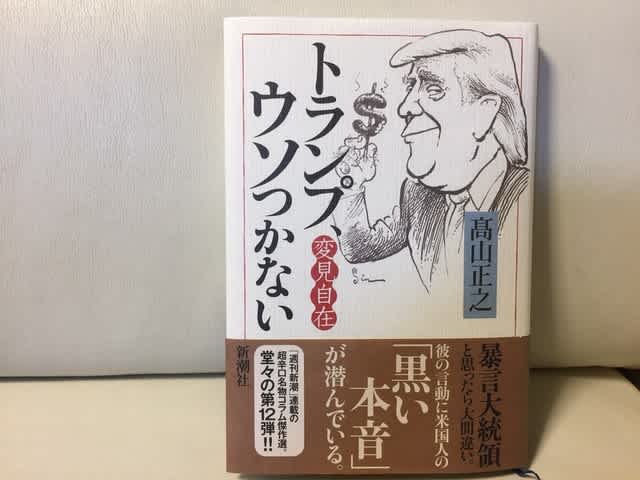
The following is from the work of Masayuki Takayama cited below.
It is an essay that proves that he is the one and only journalist in the postwar world.
His criticism of the Asahi Shimbun is not only truly severe, but also hits the mark exactly.
Chapter One: The Death Cry of the Asahi Can Be Heard
“The Asahi’s Lies” Keep Increasing Even as Its Circulation Declines
The actual sales of the Asahi Shimbun have fallen below 6.5 million copies.
In an age when there are not even two million Christians in Japan, it is astonishing that as many as 6.5 million people read such a newspaper.
Even with that many strange people, Japanese society still keeps its sanity.
I am once again impressed by the depth of the Japanese people’s tolerance.
However, for the Asahi Shimbun, the decline in circulation seems to be a troublesome problem.
From what I hear, a certain President Watanabe strongly said that since what they write is, after all, only criticism of Abe and Japan–South Korea friendship, they should not spend money on reporting.
In other words, it seems that, following their senior Katsuichi Honda, it is enough to fabricate stories as though they had seen them, without doing any reporting.
Was the “Tensei Jingo” column in the midst of the uproar over the security legislation on September 20, 2015, also the fruit of that?
It was about a second-grade elementary school child who wrote a letter expressing concern about threatened peace and entrusted it to the principal, saying, “Please deliver this to Prime Minister Abe.”
Would a seven-year-old child really watch Diet debates closely and be moved by the words of Kazuo Shii?
A little earlier, there had been the trial of Kanae Kijima, who went around killing men with charcoal briquettes.
She had bought charcoal briquettes and also bought a charcoal stove.
She had also stolen the victims’ money.
Everything indicated that she was guilty, but there was no direct evidence such as eyewitness testimony or fingerprints.
At that time, the prosecution’s argument began with the words, “When we woke up in the morning, the outside was covered in snow.”
“Even if no one saw it, there is no room for doubt that snow fell during the night.
There is a possibility that someone brought snow by truck and scattered it, but how would a healthy Japanese person judge?”
Circumstances convey the truth better than anything.
It is the same.
It is more obvious than snow falling during the night that this letter was planted by a parent or a teacher.
Even inside the Asahi Shimbun, it became a topic of conversation for a while that “Tensei Jingo” had begun telling cheap lies.
A third-party verification committee of Tokyo Electric Power Company revealed that at the time of that accident, the Prime Minister’s Office had ordered them not to use the words “core meltdown.”
This too is the same as the snow during the night.
No one feels any doubt that Naoto Kan said it.
However, the Asahi considers itself the parent of the Democratic Party of Japan.
Kan, who speaks against nuclear power, is also an incarnation of the Asahi.
The Asahi hurriedly brought Kan out and had him deny that he had given such an order.
It is like having Kanae Kijima say, “No, someone brought the snow by truck during the night and scattered it.”
Writing both sides’ claims side by side may look fair, but the person being allowed to speak is wrong.
Without doing any reporting, they deceive people through this kind of patchwork excuse.
The Asahi Shimbun’s nature, in which even the desk editors do not check such things, cannot be explained only by the cost-cutting that Watanabe mentioned.
But it can be explained by the arrogance that they have traditionally possessed.
They think that even if they write whatever comes to mind, their foolish readers will not be able to see through the lie.
In fact, only a few days later, an article based on the assumption that “readers are fools” appeared.
The Nuclear Regulation Authority approved the extension of operation beyond forty years for a reactor at Kansai Electric Power’s Takahama Nuclear Power Plant.
On its front page, the Asahi wrote that this trampled on the principle that “nuclear reactors should be decommissioned after forty years,” and that aged reactors would likely continue to survive and operate one after another, which was dangerous.
On page two, it made a fuss under the headline “Where Has the Forty-Year Principle Gone?” and in its editorial, titled “Opposing the Extension of Operation,” it barked that the Asahi Shimbun had advocated a society with zero nuclear power plants twenty to thirty years from now, and that this contradicted that goal.
It is laughable that the Asahi thinks that if it lines up its lofty pronouncements, the public will bow reverently and follow.
It has written lies about comfort women and lined up masochistic lies, and we have not yet heard even a word of reflection from it.
Above all, before brandishing principles, why does it not speak about how things are in the world?
Nuclear power plants are valued throughout the world, including Germany.
In the United States, 99 reactors are operated at utilization rates of more than 90 percent, and among them 83 reactors have exceeded a reactor age of forty years and have been extended to sixty years.
The other day, an application was even submitted to extend operation to eighty years.
In contrast, Japan’s reactors, because of the Asahi’s harassment and the trouble caused by local governments demanding money, have utilization rates less than half those in the United States.
Even after forty years, they are still sparkling clean.
In what sense are they aged reactors?
Whenever something comes up, the Asahi lectures us about how things are done abroad.
Yet on the nuclear power issue, it does not convey at all the information that “in the world, nuclear reactors are now operated for eighty years.”
The 6.5 million readers who are looked down upon to this extent must indeed be quite foolish.
(July 14, 2016 issue)