Why Do Japan’s Major Media Remain Silent?—China’s Forced Organ Harvesting Allegations and the China Tribunal’s Judgment
Published on February 19, 2020.
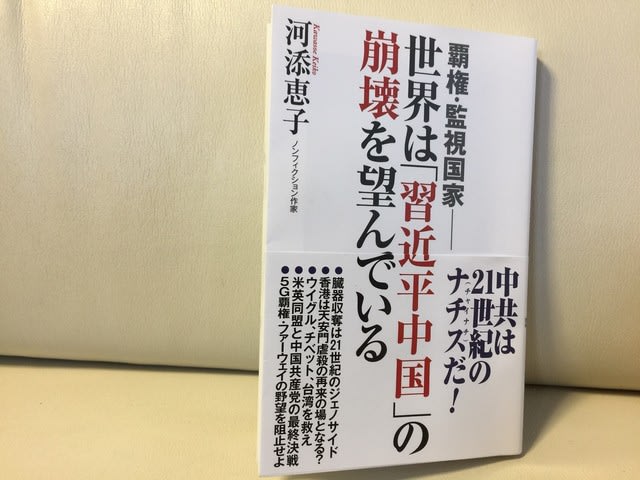
Based on a work by Keiko Kawasoe, this essay discusses allegations of forced organ harvesting from prisoners of conscience in China, the public hearings of the China Tribunal held in London in December 2018, and its final judgment in June 2019.
Through testimony from Falun Gong practitioners, the interim judgment by Sir Geoffrey Nice, and the involvement of ETAC and the Five Eyes, it examines allegations of crimes against humanity under the Chinese Communist Party regime, while sharply criticizing Japan’s major media and politicians for continuing to remain silent.
2020-02-19
“Inside the detention camp, I was constantly beaten, but I was taken to a large bus equipped with advanced devices, where blood tests, heart tests, kidney tests, and other physical examinations were carried out.”
The following chapter also proves that the Asahi Shimbun and NHK are completely under the influence operations of the Chinese Communist Party.
The author, Keiko Kawasoe, is one of the leading journalists of our time.
It is a book that not only the Japanese people but people all over the world must read.
In this essay, not only the preceding passage but also large portions of the middle have been omitted, but needless to say, all of those parts too are essential reading.
I urge the Japanese people to go to their nearest bookstore and purchase the book.
Those in the international community who have taken at face value the anti-Japanese propaganda of China and South Korea should recognize the truth through this essay.
The following chapter brilliantly clarifies facts that, in particular, the Japanese people and people throughout the world did not know.
Japan’s Major Media Remain Silent as Ever
Amid allegations that the Chinese government has been systematically involved in the forced harvesting and sale of organs from “prisoners of conscience,” meaning innocent people, the world’s first public hearings of a people’s tribunal concerning these allegations were held in Britain from December 8 to 10, 2018, timed to coincide with the 70th anniversary of International Human Rights Day on December 10.
Thirty witnesses and experts from around the world gathered in London to present evidence.
Professor Wendy Rogers, a clinical ethicist and chair of ETAC’s International Advisory Committee, stated in a press release before the hearings that “this people’s tribunal is a proper response to credible and continuing allegations that prisoners of conscience are being killed for their organs in China. For the international community to address alleged crimes on this extraordinary scale, a firm analysis in light of the law is required. Through the people’s tribunal, such analysis and a transparent and permanent record based on evidence of forced organ harvesting in China will be presented.”
The tribunal was chaired by the aforementioned Sir Geoffrey Nice, and the six other panelists consisted of experts in a wide range of fields, including international law, medicine, business, international relations, and Chinese history.
One of the witnesses, a Falun Gong practitioner and prison survivor who is now a refugee in Thailand, testified, “Inside the detention camp, I was constantly beaten, but I was taken to a large bus equipped with advanced devices, where blood tests, heart tests, kidney tests, and other physical examinations were carried out.”
Anyone can imagine from what follows what is meant by the contradictory act, carried out by Chinese-related authorities, of “conducting physical examinations while beating people.”
Then an extraordinary interim judgment was also issued.
The chair stated that “forced organ removal has been carried out on a substantial scale in mainland China,” and further added that “the largest group of victims has been Falun Gong practitioners.”
In addition, Item 12 of the interim judgment stated: “The members of this tribunal are all unanimously certain, beyond any doubt, that forced organ harvesting has been carried out in China for a considerable period of time, involving an extremely large number of victims. Whether this act constitutes an international crime, and if so by whom it was committed, will be dealt with in detail in our final judgment, together with findings on the timing and number of victims.”
And in the final judgment of June 2019, it became clear that the Chinese government represents “an evil far exceeding the crimes of mass killing in the previous century, such as Nazi Germany, the Khmer Rouge, and the Tutsis of Rwanda.”
It may be said that the long struggle for “justice against the lies of the Chinese authorities,” carried on by ETAC, whose core consists of the five Five Eyes countries, along with experts, witnesses, and those connected to the victims, has come to an end and has at last reached the starting line.
Immediately afterward, English-language media began reporting the people’s tribunal’s final judgment to the world one after another.
Meanwhile, Japan’s major media and many politicians continue to remain silent as ever.
On November 7, 2019, at the Committee on Foreign Affairs and Defense, House of Councillors member Hiroshi Yamada raised the issue of forced organ harvesting with the government, yet those who normally shout loudly about “human rights” and “safety and security” have remained quiet.
Do they still intend to continue aiding criminals?
I would like to say that they are guilty of the same crime.