How GHQ Weakened Postwar Japan: The MacArthur Constitution, Family Planning, and the Origins of Japan’s Population Decline
March 23, 2020
Based on a dialogue between Masayuki Takayama and Masahiro Miyazaki, this article examines GHQ’s postwar occupation policies, the release of Communist Party members, the first postwar general election, the establishment of the so-called MacArthur Constitution, Shizue Kato and the family-planning movement, the Eugenic Protection Law, the promotion of the nuclear family, and the origins of Japan’s subsequent population decline.
Through them, the MacArthur Constitution was approved.
It is better to regard the first postwar general election—in which, in addition to members of the Communist Party, thirty-nine women were elected—as an election orchestrated by GHQ.
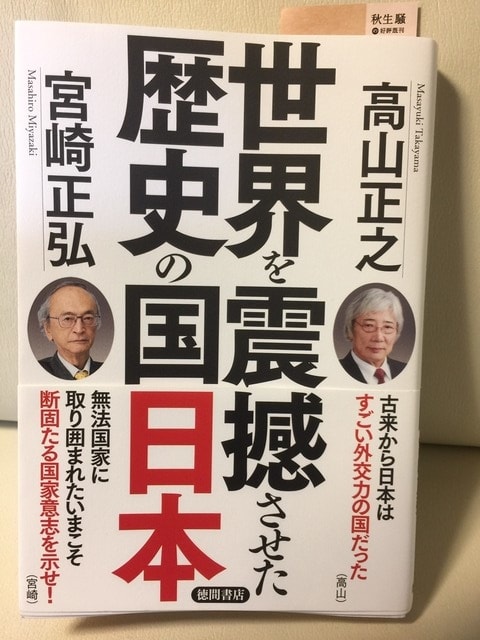
The following is from an extraordinary dialogue between Masayuki Takayama, the one and only journalist in the postwar world, and Masahiro Miyazaki, one of the world’s leading experts on China.
This is a book that every Japanese person should go to the nearest bookstore and buy immediately.
It is also a book that people throughout the world should read, and I will do everything I can to convey its contents.
Introductory text omitted
Takayama
The North Korean army suddenly crossed the 38th parallel and attacked.
Until then, Japan had ruled the Korean Peninsula, which had therefore served as a defensive barrier.
The moment Japan disappeared from the peninsula, Korea was divided, and half of it fell under Communist rule.
The Japanese disliked Christianity as well, but they also deeply distrusted the Communist Party and never relaxed their vigilance toward it.
The Americans understood none of this.
William Sebald, who served under Douglas MacArthur, wrote in With MacArthur in Japan that whenever he met people in Japan’s political, financial, and bureaucratic circles, they repeatedly warned him, “Be on guard against the Communist Party.”
The Americans who initially occupied Japan were not particularly wary of communism or communists.
Before the first postwar general election in 1946, Communist Party leaders who had been imprisoned were released, permitted to resume political activity, and allowed to stand for election.
Miyazaki
Kenji Miyamoto and Kyuichi Tokuda were among those released.
Takayama
The first postwar general election was a disorderly election in which GHQ even interfered deeply in the political process.
They also sent Shizue Kato, who argued that women’s sexuality should be liberated on the same basis as men’s, into the Diet.
They were precisely what might be called “MacArthur’s children,” and through them, the MacArthur Constitution was approved.
It is better to regard the first postwar general election, in which thirty-nine women were elected alongside Communist Party members, as a staged production arranged by GHQ.
Miyazaki
Were all of them elected?
Takayama
All thirty-nine were elected.
According to Shizue Kato’s own records, an American military officer came to her one day and encouraged her to run for office.
Miyazaki
Shizue Kato’s husband was Kanju Kato, a Socialist Party politician, wasn’t he?
Takayama
The reason Shizue Kato attracted attention was that she had been one of Japan’s foremost followers of Margaret Sanger, the American advocate of birth control and family planning.
First, to weaken Japan, the Constitution deprived the country of the ability to maintain conventional military forces and renounced the right of belligerency.
Then came family planning.
The argument was made that women’s rights required the widespread use of contraception and that women should be freed from the consequences of unwanted pregnancy.
Margaret Sanger argued that it was unfair for men to enjoy sexual freedom while women alone bore the consequences of pregnancy, and she promoted contraceptive devices and methods.
Her aim was to create a society in which women, too, could enjoy sexual freedom.
Agnes Smedley was associated with the same circle.
She had been deeply dissatisfied with conventional marriage and motherhood and eventually left her husband and child.
Smedley and Shizue Kato were both connected with Sanger and the birth-control movement.
Smedley later went to Shanghai.
While there, she reportedly asked Sanger to send additional contraceptives.
Shizue Kato assisted with their shipment.
Miyazaki
That is an extraordinarily vivid story.
Where is it written?
Takayama
It is not written quite that explicitly.
But in a 1997 book published by the Sankei Shimbun, Twentieth-Century Correspondents, a female reporter from the Osaka Sankei wrote about the unusual relationship among Sanger, Shizue Kato, and Smedley under the title “Storm of Sex.”
Miyazaki
Smedley had relationships with many men.
She certainly had a relationship with Richard Sorge as well, didn’t she?
Takayama
And with Hotsumi Ozaki.
What they supposedly used at the time was a Sanger-brand condom.
[Laughs]
GHQ intended, in effect, to make the Japanese people disappear as a distinct people.
Middle section omitted
Among the terms imposed upon Carthage by Scipio was a requirement concerning the children of Carthaginian nobles being sent to Rome.
The postwar treatment of Japan reminds me of this.
Miyazaki
There is a resemblance.
The Fulbright scholarships, for example?
Takayama
Furthermore, under the banner of turning Japan toward agriculture, GHQ encouraged NHK to produce programming focused on rural life.
Miyazaki
From 1963, there was Bright Farming Village.
Even today, there is a shochu brand called Seiko Udoku.
Takayama
Japan is an industrial country, so its dependence upon agriculture has never been overwhelmingly high.
The agricultural population was about five percent, wasn’t it?
Miyazaki
Today it is around one percent.
If fisheries and forestry are included as part of the primary sector, however, the figure would of course be somewhat higher.
Takayama
Fishing now employs roughly 400,000 people.
Forestry has declined to almost nothing.
Agriculture is officially said to employ millions, but the Ministry of Agriculture counts even people who devote only a very small amount of time each year to agricultural work.
The number actually engaged in agriculture as their principal occupation is much smaller.
When I was in my first or second year of junior high school, around 1956 or 1957, the Anti-Prostitution Law had been enacted but had not yet fully come into force, and there was a nationwide standardized examination.
One question asked what percentage of the population was engaged in agriculture.
The choices were thirty percent, fifteen percent, and five percent.
I thought there could not possibly be that many, so I chose five percent.
I was the only student to receive a perfect score of 100, which is why I remember it so clearly.
Even then, I understood the agricultural population to be about five percent.
In other words, although Japan was not fundamentally an agricultural country, NHK was broadcasting programs such as Bright Farming Village.
There were correspondents with titles consisting of various alphabetic initials, and they reported on matters such as wheat harvests.
At the time, radio remained an enormously important source of information.
Miyazaki
There were also openly Christian programs such as The Lutheran Hour.
GHQ Plotted Japan’s Population Decline Through Family Planning and Eugenic Policy
Miyazaki
In 2019, the number of births in Japan finally fell below 900,000, to approximately 865,000.
This means that the seeds sown during the Occupation to reduce Japan’s population are now finally bearing fruit.
Takayama
That is right.
Either Shizue Kato and the Socialist Party deliberately pursued this policy, or they were made to dance to America’s tune.
Through Shizue Kato, family planning was promoted, with the idea that families should stop after a small number of children, and I believe that the American policy of discouraging larger families has finally borne fruit more than seventy years after the war.
In February 1946, GHQ prepared its draft for a new Japanese Constitution.
In April 1946, the first general election under universal suffrage for both men and women was held, and large numbers of women, Socialists, Communists, and other new political figures—including Shizue Kato—entered the Diet.
The new Constitution was subsequently debated and approved by the Imperial Diet and promulgated on November 3, 1946.
In short, GHQ helped create the political environment in which people it approved of entered the Diet, while many of those who opposed Occupation policy were purged from public life.
Miyazaki
It sounds like a Red Purge.
Takayama
It was not a Red Purge.
At that time, conservatives and people associated with the Imperial Rule Assistance Association were purged, and those who did not conform to GHQ policy were removed.
Then the new Peace Constitution was passed.
Furthermore, family-planning policies that, in my view, ultimately contributed to the present collapse in the birthrate were also promoted.
Crawford Sams, an Army medical officer who headed GHQ’s Public Health and Welfare Section, played an important role in postwar public-health policy.
Margaret Sanger later visited Japan repeatedly, and Shizue Kato continued to promote family planning throughout the country.
In my view, the practical effect was a policy that discouraged Japanese people from having large numbers of children.
Then came the argument that large traditional houses and extended households were unsuited to postwar Japan.
Small apartment units resembling matchboxes were built, and society increasingly moved toward the nuclear family.
From the beginning of the Occupation, I believe policies were being constructed that would ultimately reduce Japan’s population.
If the enemy had been a people who could simply be physically exterminated, women and children could have been killed and, with only men remaining, the population would eventually disappear.
History contains examples such as the Sand Creek massacre, in which women and children were slaughtered when many of the men were absent.
But because the war had ended, such a thing could not be done openly in Japan.
Instead, campaigns promoted the idea that the traditional extended-family system was undesirable, that the nuclear family was preferable, and that unwanted pregnancies could be terminated.
Once families became nuclear, a small two-room apartment was considered sufficient, and the ideal became one or two children.
For many years, that value system was promoted by the Asahi Shimbun, Shizue Kato, and the Socialist Party.
Miyazaki
I see.
So, in your view, Japan’s rabbit-hutch apartment complexes were also part of an American policy.
They spread the idea that small homes were sufficient.
After repatriation accelerated in the immediate postwar years, annual births in Japan rose to around 2.7 million, creating the baby-boom generation.
Was it after America saw this baby boom that it began advocating population reduction?
Or are we interpreting earlier policies in hindsight?
Takayama
No.
GHQ was already discussing family planning in the early postwar period.
Shizue Kato had been active in the birth-control movement since before the war and had long been associated with Margaret Sanger and movements concerned with reproduction, family planning, and eugenic ideas.
That background was one reason she attracted immediate attention in the postwar period.
In that sense, I believe that the Occupation authorities deliberately pursued what might be called the “Carthaginization of Japan.”
In 2019, legislation was enacted to provide lump-sum compensation to people who had been subjected to forced sterilization under the former Eugenic Protection Law, and Prime Minister Shinzo Abe apologized to the victims.
But in my view, the Socialist Party and the Asahi Shimbun also bear responsibility for the political and social climate surrounding those policies.
The Eugenic Protection Law, enacted in 1948, was promoted by politicians including Shizue Kato.
I regard the eugenic policies associated with that era as profoundly wrong.
Germany under Hitler also pursued eugenic policies.
Japan’s postwar Eugenic Protection Law likewise produced grave violations of individual rights.
The Asahi Shimbun supported many of the postwar reforms promoted under the Occupation.
Miyazaki
The Asahi ought to change its name.
Instead of “the red, red, bright-red Asahi,” perhaps it should be called “the American Asahi.”
Latter part omitted