The Nikkyoso Education That Planted Mimic Democracy in the Japanese People — Peace, Equality, and Welfare as Empty Phrases
Published on January 20, 2020.
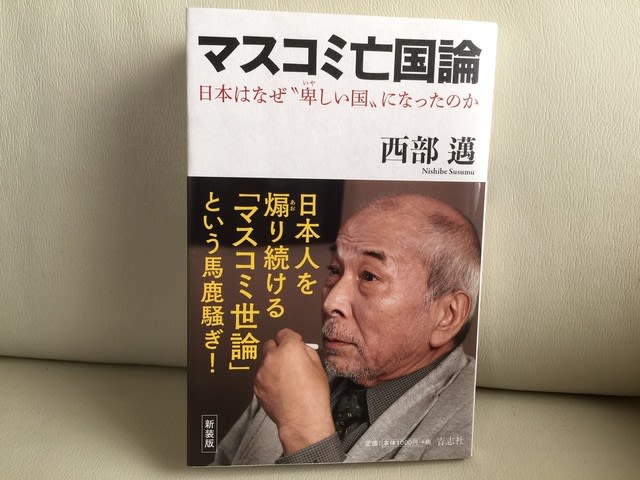
Drawing from the late Susumu Nishibe’s Mass Media Ruins the Nation, this article discusses mimic democracy in postwar Japan, Nikkyoso-style education, and the problem of the democratic language system. It criticizes how Japanese people, having been filled for many years with empty phrases such as peace, equality, and welfare, became conditioned to democratic language as a kind of mental Pavlovian reflex, while newspaper reporters commercialize criticism of power by exploiting that system.
January 20, 2020
Over the long period of sixteen years, from elementary school through junior high school, high school, and university, such empty phrases are crammed into their heads, examinations are conducted accordingly, and the possibilities of each person’s life are determined according to the results of those examinations.
The following is from the late Susumu Nishibe’s book Mass Media Ruins the Nation.
Every Japanese citizen who can read printed text must immediately go to the nearest bookstore and purchase it.
People around the world will learn, through my translation, that the mass media in your own countries are the same.
The Nikkyoso Education That Planted Mimic Democracy in the Japanese People
I will not go so far as to assert that people in the mass media possess base personalities.
They have also sought a cause or justification, out of concern that their mass-oriented line would bring about mental pollution.
That cause or justification was, for example, egalitarianism concerning money in the Recruit case, and human-rights doctrine concerning women in female scandals.
In other words, the stock phrases of the democratic system of ideas were used yet again.
What lies before our eyes may be a simulacrum of democracy, that is, a “mimicry” or “pretending.”
Our interest is nothing but peeping, yet it is given the choreography of egalitarianism.
Disguised democracy hangs over our minds.
It may also be said that “mimicry” exists as part of the very essence of democracy itself.
To regard the masses as beings excellent enough to possess sovereignty is, so to speak, nothing other than human beings mimicking God.
That is why, from the very beginning of democracy, Plato and others worried that it would degenerate into mob rule.
That is also why Tocqueville feared the crushing of individuality by democracy as “the tyranny of the majority.”
There are several reasons why this element of mimicry inherent in democracy came to be ignored to such an extent in postwar Japan, but frankly speaking, the effect of education should be cited first.
It cannot necessarily be said that many Japanese people literally believe in and formally accept the democratic education known as so-called Nikkyoso education.
Many Japanese people feel the emptiness of the beautiful phrases uttered in democratic education, such as peace, equality, and welfare.
However, over the long period of sixteen years, from elementary school through junior high school, high school, and university, such empty phrases are crammed into their heads, examinations are conducted accordingly, and the possibilities of each person’s life are determined according to the results of those examinations.
Japanese people have become accustomed to this democratic language system.
Therefore, as long as one follows mimic democracy, one can pass through life safely and, at times, even receive rewards.
Has not a kind of mental Pavlovian reflex been acquired in this way?
Newspaper reporters are the true masters of this reflex movement.
They are not criticizing the dubiousness of those in power out of any intense emotion.
They simply know that, if they criticize the dubiousness of those in power on the basis of the democratic language system, then not only will the article be safe, but circulation will also increase.