China’s Cunning in Taking Kazuo Asami Under Its Wing — The “Hundred-Man Killing Contest” Report and the Pillar Supporting the Nanjing Massacre Lie
Published on January 18, 2020.
This is a corrected republication of a chapter first posted on February 16, 2019. Drawing from Masayuki Takayama’s work, it discusses why China took Kazuo Asami, the reporter who wrote the “hundred-man killing contest” story, under its protection together with his family. It critically examines the alleged lie of the Nanjing Massacre, Japan’s ODA to China, Liao Chengzhi’s long-range strategy, and the kind of cunning that Takayama argues Japanese people would never conceive.
January 18, 2020
If the lie of the Nanjing Massacre had been exposed, would the ODA, or Official Development Assistance, from Japan that flourished in the era of Deng Xiaoping ever have been possible? Reading that far ahead, China quickly took the Asami family under its wing.
This is a republication, with two typographical errors corrected, of the chapter first posted on February 16, 2019, under the title “Kazuo Asami Was a Pillar Supporting a Precious Lie. That Is Why China Took Asami Under Its Wing.”
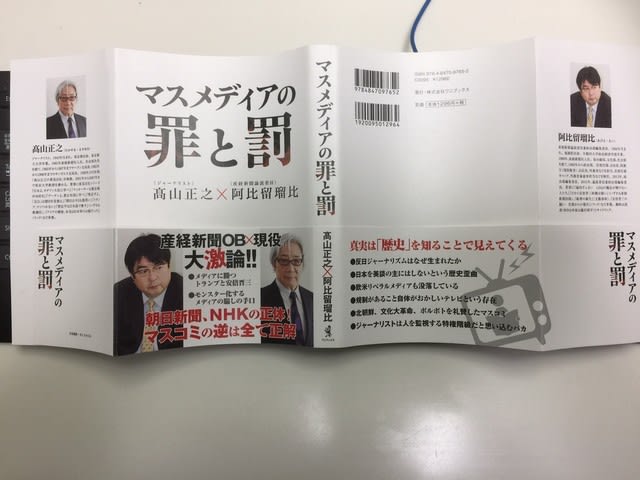
The following is from page 98 of the book listed below.
Everyone who read this chapter must surely have exclaimed, “Takayama is amazing!”
Every Japanese citizen who can read printed text must immediately go to the nearest bookstore and purchase this book.
People all over the world, through my translation, must realize how completely unaware they have been of the truth of things.
● China’s Cunning in Taking Under Its Wing the Reporter of the “Hundred-Man Killing Contest”
Takayama
The Chinese, like the Americans, are also unscrupulous.
They calmly carry out wicked schemes beyond anything Japanese people could ever imagine.
One example is the movement of Liao Chengzhi in the 1960s.
The Cultural Revolution began in 1966, but before that, Liao Chengzhi learned that Kazuo Asami was among the newspaper people invited from Japan.
In 1937, Kazuo Asami wrote a ridiculous article in the Tokyo Nichi Nichi Shimbun under the headline “Hundred-Man Killing Contest! / Both Second Lieutenants Already at 80,” claiming that Second Lieutenants Noda Takeshi and Mukai Toshiaki competed to see which of them could be the first to cut down one hundred people with a Japanese sword before entering Nanjing.
After the war, because of Asami’s article, Second Lieutenants Noda and Mukai were executed by firing squad, though they were innocent.
This “hundred-man killing contest” report was also used as supporting material for the lie of the Nanjing Massacre, which had been kneaded together by China and the United States.
The man who wrote it was this very Asami.
At the time, he was apparently serving as some kind of labor-union committee member at the Mainichi Shimbun.
Liao Chengzhi immediately invited Asami and his family, that is, his wife and daughter as well, to China, gave him work under favorable conditions, and had the daughter admitted to Peking University.
Why did he do such a thing?
Because, no matter how much one gathered the same evidence, it was clear that the “hundred-man killing contest” was a lie.
If Asami had been left in Japan, then, in fact, although Inada Tomomi later brought a lawsuit disputing that fact, it was obvious that Asami would apologize and say, “It was a lie,” and “I am sorry.”
If Asami’s lie were exposed, then the lie of the Nanjing Massacre would also be exposed, one after another.
It would indeed become the small hole made by an ant that brings down the whole embankment.
If the lie of the Nanjing Massacre had been exposed, would the ODA, or Official Development Assistance, from Japan that flourished in the era of Deng Xiaoping ever have been possible?
Reading that far ahead, China quickly took the Asami family under its wing.
Kazuo Asami was a pillar supporting a precious lie.
That is why China took Asami under its wing.
When the hundred-man killing issue became a problem in Japan in the 1970s, Asami came in from Beijing, testified that it was true, and then returned to Beijing again.
Asami’s daughter graduated from Peking University, and after that the Beijing government took proper care of her.
By chance, I met that daughter.
She was running a teahouse in one corner of a facility for Japanese tourists.
In the shop there was a framed inscription by Liao Chengzhi, and it was addressed “To Kazuo Asami.”
When I asked her about it, she said, “Yes, he is my father.”
I asked her, “Because of your father’s ridiculous article, two second lieutenants were condemned for crimes they did not commit, weren’t they?”
The daughter calmly replied, “Whether they were innocent or not is something my father knows,” and said, “My father suffered too.”
I told her clearly, “If he killed people, it is only natural that he should suffer,” but she showed no remorse at all.
What I felt was the tremendous depth of Liao Chengzhi’s foresight.
From the 1960s, he had already decided to use this as material.
Japanese people would never have such wicked cunning.
From 1979 onward, China drew out Japan’s ODA, but in short, China knew perfectly well that if Asami confessed, everything would be ruined, and so it laid down a defensive line in advance.
There is nothing one can say except that it was truly something remarkable.