Now Is the Time to Seriously Consider an Anglo-Japanese Alliance — Britain’s Independence from the Continent and the Path Japan Should Take
Published on January 17, 2020.
Drawing from Masayuki Takayama’s work, this article examines former British Ambassador to Japan Hugh Cortazzi’s criticism of Japan, the Asahi Shimbun’s reporting on Nanjing and the comfort women issue, Japanese distrust of China and Korea, and Britain’s withdrawal from the EU, arguing that Japan should now reassess its relationship with Britain and free itself from masochistic historical views and dependence on the continent.
January 17, 2020
No Japanese person believes what the Asahi Shimbun says anymore. They have gone beyond being fed up with the lies of China and Korea, which are tied to Asahi, and are now genuinely angry.
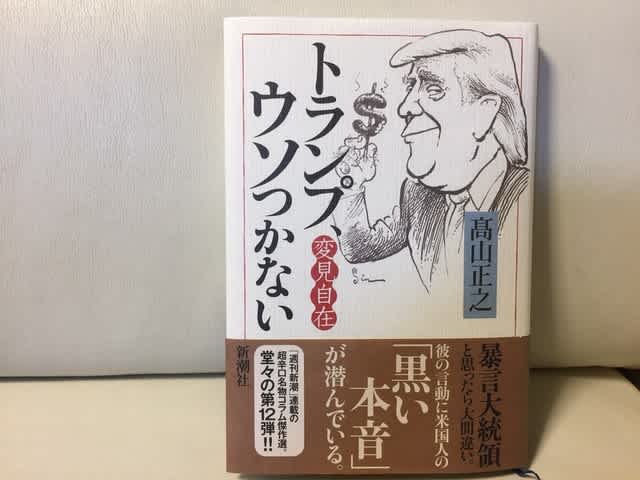
The following is from the work of Masayuki Takayama listed below.
This chapter, too, proves that he is the one and only journalist in the postwar world.
Now, If We Seriously Consider an “Anglo-Japanese Alliance”
As people grow old, their faces become gentle, like the mask of an old man.
There is also a physiological reason for this.
As one ages, flesh accumulates in unnecessary places. Flesh gathers on the cheeks and chin. In that respect, one begins to look like Hotei.
Flesh also gathers on the eyelids, and they droop under its weight.
When the eyes become narrow, the sharpness of one’s gaze is concealed.
It ought to become just as the expression says: to narrow one’s eyes in delight.
But reality is different.
Old people waiting at a traffic light stand there with faces as if they had bitten down on something bitter.
If they merely raised the corners of their mouths a little, they would have a pleasant smile, and the unsightly sagging of their cheeks would disappear.
It would also ease the feelings of the people around them.
Perhaps they do not do so because they think that wearing a serious face makes them look more thoughtful.
The same can be said of the writings of the elderly.
Hugh Cortazzi, the former British ambassador, now ninety-two years old, for some reason writes only bad things about Japan rather than amusing stories.
His relationship with Japan began with the last war.
He studied Japanese, worked in postwar Japan, and for that reason aimed to become a diplomat.
Originally, he should not have been a Japan-hater, yet now he wears a scowl and cuts down Abe without question as “far right.”
As someone knowledgeable about Japan, he knows that the Asahi Shimbun writes lies.
Yet he has begun making statements that leave even Japan hands astonished, saying that there is “no longer any need to doubt the fabrication” of the Nanjing Massacre claimed by Asahi.
On the comfort women issue as well, he has become no different whatsoever from the Asahi Shimbun, saying that “there is no doubt that the Japanese military not only committed numerous rapes but also abducted Korean women and made them sex slaves.”
No Japanese person believes what the Asahi Shimbun says anymore.
They have gone beyond being fed up with the lies of China and Korea, which are tied to Asahi, and are now genuinely angry.
That is why, even in statistics, 85 percent of Japanese say they do not want to associate with China, and even more people think that Korea would be better off disappearing altogether.
Because Cortazzi knows the Japanese well, he immediately senses that atmosphere.
So he tries to soothe them by saying, “Japan and Britain are both island nations, but they cannot live cut off from the adjacent continent” (from his contribution, “Japanese Diplomacy at a Crossroads”).
He says, “In Britain, too, there are far-right voices calling for withdrawal from the EU. But Britain cannot live without depending on the EU,” and “Japan, too, cannot live without the continent, so it must maintain normal relations with China and Korea. It must never even think of rewriting history.”
He is a Japan hand. He knows exactly where to press in order to make the Japanese feel frustrated.
One might say that he is letting his spiteful old-man nature fully show.
But then the situation changed.
Contrary to Cortazzi’s reading, Britain cut itself off from the continent.
It was the same as Japan.
It hated the continent.
So it left the EU.
At first, all that appeared were voices of self-reflection from the British people themselves, saying, “What a foolish thing we have done.”
Some said, “We want to hold another referendum and correct it.”
There was also talk in an end-of-the-world mood: Scotland would separate, Wales would follow, and Britain would fall apart.
But as time passed, it became clear that they were in fact refreshed at having severed ties with gloomy Germany and France. Their lamentations, looking up to the heavens, seem to have been a well-staged performance.
As evidence of this, Tim Hitchens, the British ambassador to Japan, spoke of the old friendship between the two countries, saying, “Japan has never once seen Britain as Britain inside the EU,” and expressed hope for Japanese investment in Britain.
And even Cortazzi, who had hurled all manner of abuse, wrote the other day in The Japan Times under the headline “Reappraising Japan-U.K. Ties,” earnestly explaining how highly Britain evaluates Japan and how much mutual trust exists between them.
He set aside his hobby of sarcasm.
In fact, Japan has been helped greatly by Britain in the past.
During the Russo-Japanese War, Britain isolated Russia and suppressed anti-Japanese malicious propaganda from the United States.
Some part of that victory was thanks to Britain.
After the war, when Britain saw Japan being held down by the United States and starving for energy resources, it was Britain that provided nuclear power generation.
As a result, the United States had no choice but to lift its ban on light-water reactors for Japan.
Moreover, Japan still has much to learn from Britain.
Although Britain was a victorious nation, it was actually on the verge of collapse under a masochistic view of history even worse than Japan’s. Its endlessly generous welfare had bankrupted its finances.
It was the same as Japan today.
Britain overcame that in roughly ten years during the Thatcher era.
Japan should learn from that and remove the shackles of masochism.
Britain has succeeded in becoming independent from the EU and has shown the path that Japan, which has been entangled by the continent, should take.
Is that not a very good story?
September 1, 2016 issue.