Even the State Called China Is Itself a Lie—The False Signboard of a “People’s Republic”
Published on February 17, 2020.
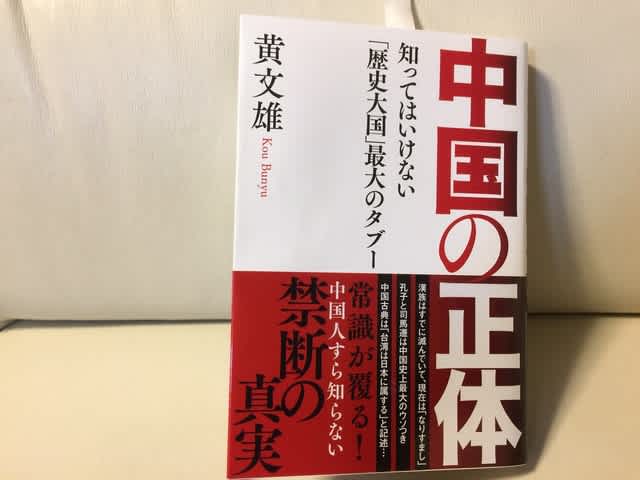
Based on a work by Kō Bun’yū, this essay extends the structure of Chinese society, in which “only swindlers are genuine,” to the fictionality of the Chinese state itself.
It argues that the People’s Republic of China has neither a true “people” nor a true “republic,” and points out the contradiction that a state born from Mao Zedong’s idea that “political power grows out of the barrel of a gun” has, since Deng Xiaoping, made a return to the state its national policy while still calling itself a “People’s Republic.”
2020-02-17
A return to the state became the national principle and national policy.
Even so, the fact that only the country’s name still calls itself Mao Zedong’s “People’s Republic” is the very embodiment of “displaying a sheep’s head while selling dog meat.”
The following is from a work by Kō Bun’yū, one of the world’s foremost scholars thoroughly versed in China.
It is a book that not only the Japanese people but people all over the world must read.
In this essay, not only the preceding passage but also large portions of the middle have been omitted, but needless to say, all of those parts too are essential reading.
I urge the Japanese people to go to their nearest bookstore and purchase the book.
Those in the international community who have taken at face value the anti-Japanese propaganda of China and South Korea should recognize the truth through this essay.
◎Even the State Called China Is Itself a Lie
China, where “only swindlers are genuine,” is not merely a place where “everything is a lie”; the state called China itself is a lie and a fiction.
Middle section omitted.
China itself also calls itself not so much “one state” as “one realm under Heaven.”
In any case, even if it is called a state, it has never been stable.
From remote antiquity, it is difficult to call it “one state.”
As far as Chinese history shows, China has repeatedly gone back and forth between state and realm-under-Heaven, in the pattern of “one period of order, one period of chaos,” and of “unification and division,” and therefore it has been consistently unstable.
Even if it has aimed to be a state, or whether as a realm-under-Heaven or as a state, is it not difficult to force a pluralistic society, culture, and civilization into one fixed form?
Middle section omitted.
① Until now, the actual condition of the People’s Republic of China has been described as that of a country with neither “citizens” nor “republic.”
Leaving aside the absence of “citizens,” “the people” certainly do exist.
② The People’s Republic of China is a state born from the civil war between the Nationalists and the Communists after the Second World War.
Among Mao Zedong’s quotations, the phrase “political power grows out of the barrel of a gun” is famous.
Seeking “equality,” aiming at “world revolution and the liberation of humanity,” the People’s Republic denied the existence of the state and made the construction of a socialist world its goal.
However, the People’s Republic after Deng Xiaoping is the complete opposite.
A return to the state became the national principle and national policy.
Even so, the fact that only the country’s name still calls itself Mao Zedong’s “People’s Republic” is the very embodiment of “displaying a sheep’s head while selling dog meat.”
③ It was only in modern times that the term “China” came to be used in place of “Shina.”
The following passage is omitted.