China, Where “Thick-Black Theory” Flourishes in Place of The Analects—A Society Where an Iron Face and a Black Heart Produce Rulers
Published on February 18, 2020.
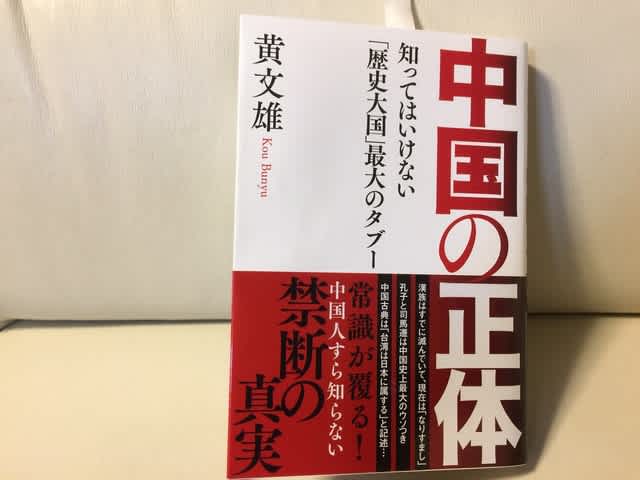
Based on a work by Kō Bun’yū, this essay discusses why “Thick-Black Theory” has come to be widely read in modern and contemporary China in place of The Analects.
It examines Li Zongwu’s “evolutionary theory of thick-blackness,” the evaluation of heroes in Romance of the Three Kingdoms, and the Chinese social view that one cannot become a ruler or hegemon unless one possesses an iron-like face, cunning, and a black heart.
2020-02-18
When I came to the passage describing “one who has an iron-like face, is cunning, and has a black heart,” I thought that this was exactly Xi Jinping’s appearance, and I finally understood what his appearance signifies.
The following is from a work by Kō Bun’yū, one of the world’s foremost scholars thoroughly versed in China.
It is a book that not only the Japanese people but people all over the world must read.
In this essay, not only the preceding passage but also large portions of the middle have been omitted, but needless to say, all of those parts too are essential reading.
I urge the Japanese people to go to their nearest bookstore and purchase the book.
Those in the international community who have taken at face value the anti-Japanese propaganda of China and South Korea should recognize the truth through this essay.
In this text, which is not easy to translate into English, when I came to the passage describing “one who has an iron-like face, is cunning, and has a black heart,” I thought that this was exactly Xi Jinping’s appearance, and I finally understood what his appearance signifies.
The preceding passage is omitted.
◎Why “Thick-Black Theory” Flourishes in Place of The Analects
At least since the modern and contemporary period began, the age in which The Analects was regarded as a “sacred text,” and in which it was said that “half of The Analects can govern the world,” meaning that even if one studies only half of The Analects, one can govern the world, has already ended.
Today, in the world of Chinese characters, what fills bookstores and is stacked flat on display in place of The Analects, once regarded as a sacred text, are books on what is called “Thick-Black Theory.”
It is said that several hundred kinds have already been published.
Japanese people should have an interest in Confucian learning, including The Analects, which teaches “benevolence, righteousness, morality, and virtue.”
Not only in the Edo period, but even today, there are not a few people who read it.
However, most Japanese people would probably not give even a glance to “Thick-Black Theory,” which teaches the techniques and art of getting through life by “living black-heartedly and brazenly.”
Is that because the societies are different?
The founder—not a religious founder, but the scholarly founder—of “Thick-Black Theory” was Li Zongwu, from Sichuan Province.
According to this founder, thick-blackness evolves with the passage of time, becoming more brazen and more black-hearted.
This is the “evolutionary theory of thick-blackness.”
Specifically, taking up examples of the heroes and great men in Romance of the Three Kingdoms, he evaluates the greatness or smallness of individuals according to the value standards of being thick-faced, shameless, cunning, persistent, or “thick,” and black-hearted, or “black.”
The greatness or smallness of a person is determined by “thick-blackness.”
From his examination of “doubt toward sages” and “doubt toward morality,” the founder saw through the lies of Confucianism, including Confucius, and, based on the historical law of thick-blackness, declared that unless one is “a person with an iron-like face, cunning, and black-hearted,” one not only cannot become a king or hegemon, but will end up living a miserable life.
This discourse, filled with paradox and directed against culture and tradition, became known as a “strange book” and caused a quiet boom during the Republican era.
And in recent years, this “thick-blackness” has rather become a business book phenomenon and has entered a second boom.
This essay will continue.