Even the Chinese State Itself Is a Lie—A State of “Selling Dog Meat Under the Sign of Mutton” That Still Calls Itself a People’s Republic
Originally published on February 17, 2020.
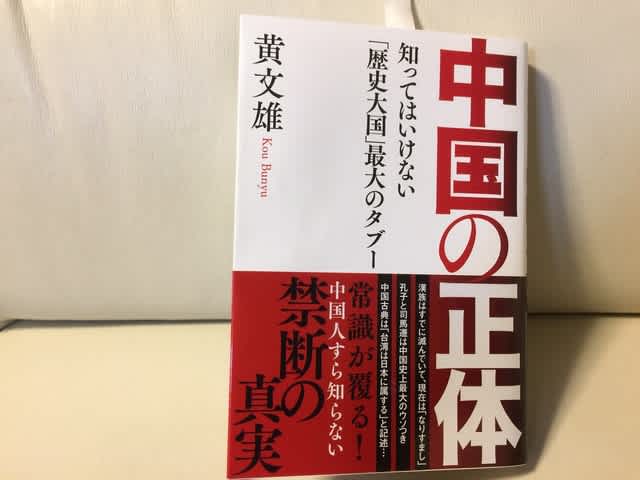
This article introduces a work by Kō Bun’yū and discusses the argument that in a Chinese society where “only swindlers are real,” even the Chinese state itself is a lie and a fiction.
It criticizes the contradiction that the People’s Republic of China has neither true “people as citizens” nor a genuine “republic,” and that despite completely reversing course from Mao’s revolutionary state to a post-Deng return to the nation-state, it continues to call itself a “People’s Republic.”
February 17, 2020
The return to the nation-state became the national principle and national policy.
Even so, the fact that the country continues, in name only, to call itself Mao Zedong’s “People’s Republic” is the very definition of “selling dog meat under the sign of mutton.”
The following is from a work by Kō Bun’yū, one of the world’s foremost scholars deeply familiar with China.
It is a book that not only the Japanese people but people all over the world must read.
In this article, not only the preceding text but also large parts of the middle section have been omitted, but needless to say, all of those passages are also essential reading.
I urge the Japanese people to go to their nearest bookstore and purchase the book.
Those in international society who have taken anti-Japanese propaganda from China and South Korea at face value should recognize the truth through this article.
◎Even the State Called China Itself Is a Lie
China, where “only swindlers are real,” is not merely a place where “everything is a lie.”
The state called China itself is a lie and a fiction.
The middle section is omitted.
China itself also claims to be not so much “one state” as “one all-under-heaven.”
In any case, even as a state, it has never been stable.
From remote antiquity, it is difficult to call it “one state.”
As far as Chinese history shows, China has repeatedly moved back and forth between state and all-under-heaven, as in the pattern of “one period of order, one period of disorder,” or “unification and division.”
It has therefore been consistently unstable.
Even if it aims to be a state, or even if it is treated as both all-under-heaven and state, is it not difficult to forcibly define a pluralistic society, culture, and civilization as one?
The middle section is omitted.
① Until now, the actual state of the People’s Republic of China has been described as a country with neither “citizens” nor a “republic.”
Leaving aside the absence of “citizens,” it is true that “the people” do exist.
② The People’s Republic of China is a state born from the civil war between the Nationalists and the Communists after the Second World War.
Among the quotations of Mao Zedong, the saying “political power grows out of the barrel of a gun” is famous.
Seeking “equality” and aiming for “world revolution and the liberation of humanity,” the People’s Republic denied the existence of the nation-state and set as its goal the construction of a socialist world.
However, the People’s Republic after Deng Xiaoping is the complete opposite.
The return to the nation-state became the national principle and national policy.
Even so, the fact that the country continues, in name only, to call itself Mao Zedong’s “People’s Republic” is the very definition of “selling dog meat under the sign of mutton.”
③ It was only in modern times that the country came to be called “China” instead of “Shina.”
The rest is omitted.