“The Claim That China Taught Culture to Japan” Is an Obvious Lie—Why Yamatoism and Sinocentrism Are Complete Opposites
Originally published on February 17, 2020.
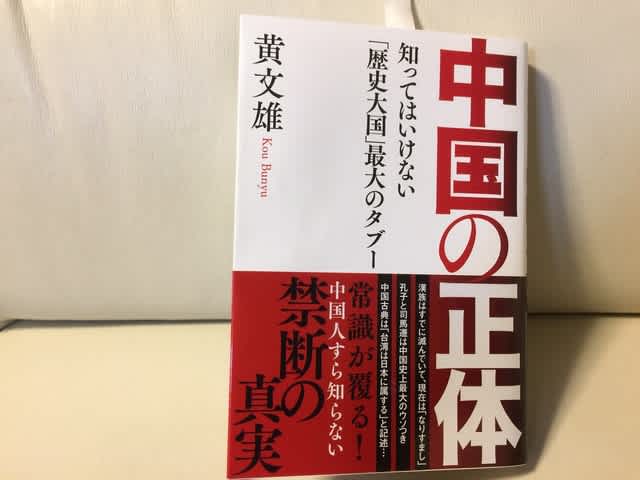
This article introduces a work by Kō Bun’yū and examines the falsehood of the claim repeatedly made by China and Korea that they “taught culture to Japan.”
While China and Korea boast of long histories, the article points out that wars, dynastic revolutions, book burnings, and the Cultural Revolution prevented many ancient cultural artifacts from being preserved there, while many Buddhist scriptures and classics were preserved in Japan and later re-exported to China.
It further clarifies the decisive difference between Yamatoism and Sinocentrism by discussing the secretive “never transmit outside the gate” tradition of Chinese dynasties, restrictions placed on Japanese envoys to Tang China, and the fact that Buddhism and Western modernization took root in Japan while Confucianism never did.
February 17, 2020
Men of letters who say that China “taught culture to Japan” are clearly lying.
The following is from a work by Kō Bun’yū, one of the world’s foremost scholars deeply familiar with China.
It is a book that not only the Japanese people but people all over the world must read.
In this article, not only the preceding text but also large parts of the middle section have been omitted, but needless to say, all of those passages are also essential reading.
I urge the Japanese people to go to their nearest bookstore and purchase the book.
Those in international society who have taken anti-Japanese propaganda from China and South Korea at face value should recognize the truth through this article.
◎Yamatoism and Sinocentrism Are Polar Opposites
Both Greater China and Little China repeatedly say, almost as a pet phrase, that they “taught culture to Japan.”
However, whenever I hear the claim that they “taught culture to Japan,” the question I often have is this: if that is so, why are “Yamatoism and Sinocentrism” completely “opposite” in mentality and ethos?
China takes pride in its 5,000 years of history.
Even when I was in elementary school, we were taught to take pride in such an eternal history.
China regards the Yellow Emperor as the founding ancestor of the nation, and teaches, by rounding off, that it has “5,000 years of history.”
Of course, Korea, not to be outdone, treats the mythical Dangun as the founding ancestor of the nation and calls itself a country with “half of ten thousand years” of history.
There are even some who add another 1,000 years and make it a 6,000-year history in order to boast that Korea has a longer history than China.
In recent years, in Korean “urinara,” or “our country,” boasting, it has been claimed that Confucius, Qin Shi Huang, the ancient beauty Xi Shi, and Li Shizhen, the author of the great Chinese medical work Bencao Gangmu, were all Koreans, and that Chinese characters, Chinese medicine, and feng shui were also invented by Koreans.
Even Chiyou, originally regarded as the ancestor of the Miao people of the southern Baiyue, has been made into an ancestor of Koreans, and imaginary novels saying that he defeated the Yellow Emperor, the mythical ancestor of the Chinese people, have become bestsellers and have even been made into films.
In response to this, China has reacted by calling it a “Korean invasion of Chinese culture.”
China and Korea are also fighting over Goguryeo and Balhae, with one side saying, “Goguryeo and Balhae were local regimes of China,” and the other saying, “No, they are unmistakably part of Korean national history.”
Since China and Korea have eternal histories and taught culture to Japan, one might think that many ancient cultural artifacts must have been preserved there.
In reality, however, this is not particularly the case.
In terms of companies, Japan has more than 3,000 long-established firms that have continued for over 200 years, the largest number in the world.
In Korea, there are only about two long-established firms that are over 100 years old, and it is a society so unable to continue that it is said, “There is no shop that lasts for three generations.”
In China, even though its history is long, there are not so many long-established firms.
The oldest Chinese herbal medicine shop, Beijing Tongrentang, was founded in 1669.
On the other hand, Japan’s Kongō Gumi, a temple-construction firm of shrine and temple carpenters, is the world’s oldest business, founded in 578.
In 2005, it was reported to be in danger of bankruptcy, but it received full support from Takamatsu Construction in the same industry and preserved the long-established firm.
The reason China and Korea, despite their long histories, have not been able to preserve many cultural artifacts is that their social structures are completely different.
China has suffered endless warfare and has repeatedly undergone the history of completely denying the previous dynasty through dynastic revolution, or change of ruling surname.
Moreover, from Qin Shi Huang’s burning of books and burying of scholars to the Cultural Revolution, the erasure of culture has been repeated.
For example, the Confucius clan is said to continue today to more than 70 generations, and the descendants of Confucius alone are said to number 3.5 million.
Many people compete to call themselves direct descendants, but in reality, during the Taiping Rebellion in the 19th century, tens of thousands of soldiers of the Nian Army, a White Lotus–based cult group in North China, attacked Qufu in Shandong Province, the birthplace of Confucius.
They desecrated the ancestral temples and tombs of successive generations of Confucius, and the direct descendants were killed off.
Also, because warfare never ceased, many books were scattered and lost.
Many scriptures, beginning with Buddhist scriptures, are preserved in Japan.
As far back as the Song dynasty, 1,000 years ago, Japanese monks who crossed to Song China conversely presented to China classics that had been lost there.
Even in modern times, Japan re-exported to China banned books such as Xinxiu Bencao and The Ten Days of Yangzhou.
After the Sino-Japanese War, the number of Chinese students studying in Japan increased, and works of Wang Yangming learning that had been banned in the Qing dynasty, such as Li Zhuowu’s Book to Be Burned and Book to Be Hidden, were re-exported to China.
The countries and peoples of the Chinese world often say not only that they “taught culture to Japan,” but also that “the Japanese are descendants of the Chinese,” and that “Chinese Yayoi people brought advanced technology and created the Japanese nation.”
Little China also constantly says that it taught culture to Japan.
Textbooks on both the Japanese and Korean sides even say that “Dr. Wani taught culture to Japan.”
However, the countries of the Chinese world have a tradition not of “complete transmission of the license,” as in Japan, but of secretiveness in which teachings are “never transmitted outside the gate.”
Since they “absolutely do not teach” even their own people, this is all the more true toward outsiders.
The cultural policy of “never transmitting outside the gate,” meaning absolutely not teaching culture, is a rule of the Chinese dynasties.
They feared that the culture of barbarians might surpass that of China, especially with regard to the Seven Military Classics, beginning with Sun Tzu: The Art of War, Wuzi, Wei Liaozi, Six Secret Teachings, Three Strategies, Sima Fa, and Questions and Replies Between Tang Taizong and Li Weigong.
Even in the Tang dynasty, which is considered to have been the most international and the freest period, Japanese envoys to Tang China, who were representatives of a foreign government, needed permission not only to visit the temples of the three teachings of Confucianism, Daoism, and Buddhism, but even to inspect markets, while government officials and spies kept strict watch over them.
The culture that the Japanese envoys to Tang China learned from the Tang was also limited, and most of it entered Japan only after the Tang had fallen.
In the Song dynasty, the remains of Tang culture were disposed of and sold off in a great sale, and during the period of Japan-Song trade, daimyō throughout Japan paid large sums of money to buy those items from smugglers.
In a sense, they were discarded goods.
Men of letters who say that China “taught culture to Japan” are clearly lying.
Kūkai’s crossing to Tang China, the monk Jianzhen’s voyage to Japan, and Xuanzang’s journey to India to obtain Buddhist scriptures all show just how strict the Tang dynasty’s land and sea prohibitions, or land and maritime isolation policies, were.
Perhaps there may have been other missionaries like the monk Jianzhen, who broke the ban on transmitting teachings outside the gate and taught culture to Japan.
But the question is whether those teachings were able to take root in Japan’s climate.
For example, after Buddhism was transmitted to Japan, it became rooted there as Kamakura Buddhism.
The same can be said of Western modernization.
However, according to the historian Dr. Tsuda Sōkichi, no form of Confucianism ever took root in Japan.
That is probably because the cultural climate was completely different.
The Japanese have long had strong curiosity, and culture has continued to flow in from all directions.
There was even a time when Japan learned the ritsuryō system from the Tang.
The question is whether it can take root as Japanese culture.