The Japanese and Confucianism Are Incompatible—How “Utmost Sincerity” Made Postwar Japan Accept Historical Lies
Originally published on February 17, 2020.
This article introduces a work by Kō Bun’yū and discusses how Confucian states are historically bound to falsehood and boasting, tracing Qin legalism, Huang-Lao thought in the Former Han, the exclusive elevation of Confucianism after Emperor Wu, Wang Mang’s failed Confucian kingdom, and the “mutton sign, dog meat” method of rule known as “Confucianism on the outside, legalism on the inside.”
It argues that while Japan accepted Buddhism on the basis of its ancient spirit of purity and sincerity, Confucianism never took root there, and that Japanese good nature and utmost sincerity also became the basis for accepting postwar “historical lies” such as the Nanjing Massacre and the forced recruitment of comfort women.
February 17, 2020
On the other hand, that good nature also becomes the basis for accepting lies from China and South Korea.
Postwar Japan accepted “historical lies” such as the Nanjing Massacre and the forced recruitment of comfort women.
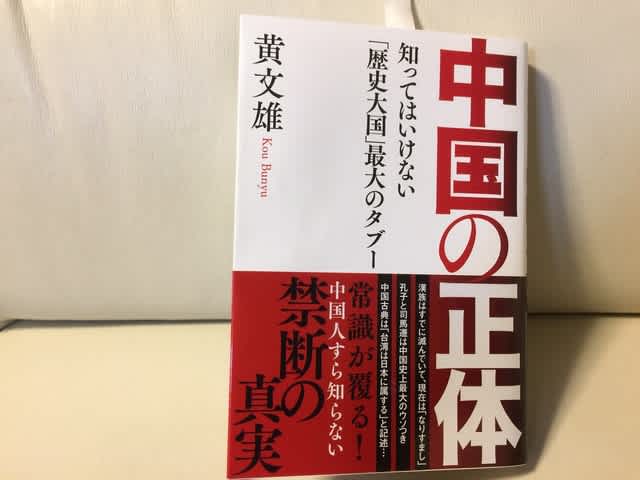
The following is from a work by Kō Bun’yū, one of the world’s foremost scholars deeply familiar with China.
It is a book that not only the Japanese people but people all over the world must read.
In this article, not only the preceding text but also large parts of the middle section have been omitted, but needless to say, all of those passages are also essential reading.
I urge the Japanese people to go to their nearest bookstore and purchase the book.
Those in international society who have taken anti-Japanese propaganda from China and South Korea at face value should recognize the truth through this article.
◎The Japanese and Confucianism Are Incompatible
History has already proved, since the time of Confucius himself, the founder of the teaching, that Confucian states inevitably have the destiny of being liars and boasters.
For example, it is well known that Qin, the first unified dynasty, aimed not so much at “rule by virtue” as at “rule by law,” meaning punishment and penalties, and disliked Confucianism and Confucian scholars, carrying out the burning of books and burying of scholars.
According to Legalist thinking, “men of letters disturb the world with the brush, and knights-errant disturb the world with the sword,” so they argued that people must be controlled by “law” rather than “virtue.”
Qin rule by law resembles that of the Roman Empire.
Then, in the following Former Han period, the age of stability under Emperors Wen and Jing, known as the “Rule of Wen and Jing,” the world was governed rather through laissez-faire based on Lao-Zhuang thought, also called the “technique of Huang-Lao.”
Daoist and Lao-Zhuang thought analyzed the structure of society by pointing out that “when the Great Way is abandoned, benevolence and righteousness arise.”
It opposed the Confucian “benevolence, righteousness, and morality,” and preached “cut off benevolence and abandon righteousness,” meaning that benevolence and righteousness should be discarded at once.
In the Chinese empire, “rule by virtue” based on Confucian thought began only after Emperor Wu of the Former Han decided on the exclusive elevation of Confucianism.
During Emperor Wu’s reign, foreign wars were launched almost every year, causing the population to fall by half, and the national wealth accumulated since the time of his ancestors, Emperors Wen and Jing, had already been exhausted.
The state finances were truly on the brink of collapse, so reform of national administration was necessary.
Emperor Wu accepted the advice of the Confucian scholar Dong Zhongshu regarding the “recommendation of the worthy and good.”
This policy meant selecting and appointing to office people who were capable and virtuous, with virtue here mainly referring to filial piety.
However, when this policy was actually adopted, it led to a situation in which only the children of landlords and powerful clans, who had the leisure to study, advanced into central politics.
Farmers were exploited, land annexation advanced, and great landlords and powerful clans rose as new emerging forces.
After Emperors Wu and Zhao, Emperor Xuan ascended the throne.
Emperor Xuan, who had quickly seen through the defects of Confucian moral politics, warned the crown prince, who was devoted to Confucianism, that Han national policy should give equal weight to law and Confucianism.
He warned that Confucian scholars read too many books and could not distinguish reality from ideals.
They were fools who clung only to antiquity and criticized the present, and such people must not be taken seriously.
He even predicted, “The one who will destroy my house will be the crown prince.”
Emperor Xuan’s theory that Confucianism would ruin the state proved brilliantly accurate.
When the crown prince became Emperor Yuan, Confucian scholars were heavily used, and before long the realm was seized by Wang Mang, a maternal relative of the imperial family.
On the basis of Confucian classics, Wang Mang claimed that the imperial throne had been yielded to him by the Mandate of Heaven, and made himself emperor.
This became the ceremonial performance of regime change thereafter, beautified as “abdication” in the pattern of dynastic revolution.
This performance of abdication imitated the legend in which the sage king Yao yielded the “imperial throne” to Shun, and Shun yielded it to Yu, not by hereditary succession but to virtuous men under heaven.
In the abdication ritual, the usurper refuses the yielding of the throne several times and then reluctantly ascends the throne, and the ceremony, including its staging, is extremely complicated.
After the Han, some dynastic changes took the form of peaceful abdication, as with Wang Mang, while others, as in the Six Dynasties or the Five Dynasties and Ten Kingdoms, used military force as a shield.
Even so, the changes of successive dynasties were often carried out through this form of abdication.
This performance of abdication, which should more properly be called a “false ceremony” rather than a ceremony, continued endlessly from the late Later Han through the Wei, Jin, and Six Dynasties, then through the Five Dynasties and on to the Song.
It may be called the culmination of fraud in the Chinese world.
After ascending the imperial throne, Wang Mang founded Xin, the first “Confucian kingdom” in Chinese history, and adopted state-socialist policies such as the prohibition of private ownership of land and slaves and state monopolies on salt and iron.
This unrealistic ideal politics instead brought great disorder under heaven, and the Wang Mang dynasty collapsed in a single generation.
“Rule by virtue” is impossible in practice.
Even if virtue is raised as the official principle, in reality the realm cannot be governed without law.
Because the Confucian kingdom idealized by Wang Mang brought great disorder under heaven, after Emperor Wu of the Han people came to speak of “Confucianism on the surface, law underneath” and “Confucianism outside, legalism inside.”
The exclusive elevation of Confucianism became only a formal principle, that is, words alone.
It was a method of rule in which the true intention was entirely different from the outward sign—a case of “selling dog meat under the sign of mutton.”
Since the age of the gods, Japan has had the admonition of “purity and sincerity,” and this also became the basis for accepting Buddhism.
On the other hand, Confucianism did not suit Japan.
On the other hand, that good nature also becomes the basis for accepting lies from China and South Korea.
Postwar Japan accepted “historical lies” such as the Nanjing Massacre and the forced recruitment of comfort women.
That too is because there is a foundation of “utmost sincerity.”
However, Japan is a society that recognizes pluralistic values, so this cannot be forced on all Japanese people.
It remains limited only to a certain group of “believers.”
The reason the Japanese cannot be indoctrinated into a particular monotheism like Christianity or Islam lies in the fact that they fairly tolerate such “particular values.”