The Chinese Temperament That Denies Diversity and Seeks Unification—The Decisive Difference Between Chinese and Japanese Civilization Seen Through “Deception, Theft, Struggle, Selfishness, and Filth” and “Sincerity, Giving, Harmony, Public Spirit, and Purity”
Originally published on February 17, 2020.
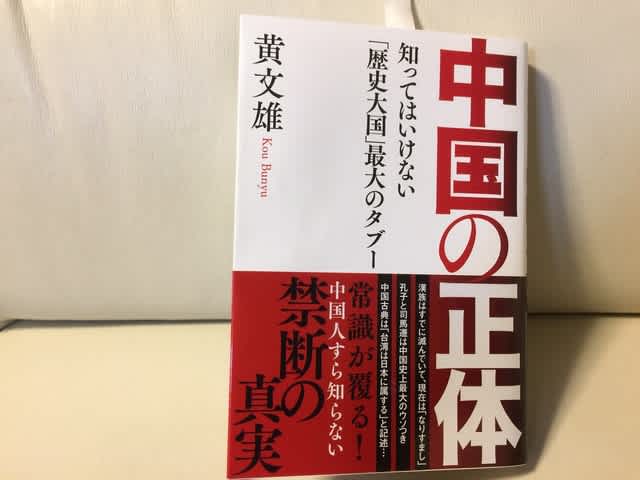
This article introduces a work by Kō Bun’yū and contrasts the mentality and behavior of the Chinese, expressed as “deception, theft, struggle, selfishness, and filth,” with the Japanese national character, expressed as “sincerity, giving, harmony, public spirit, and purity.”
Through China’s tendency toward monistic unification, the limits of Confucian and Daoist thought, Kūkai’s classification of Chinese thought in The Ten Stages of the Mind, Japan’s eight million gods, polytheistic receptivity, syncretism of Shinto and Buddhism, craftsmanship, and the principle of coexistence and mutual prosperity, it clarifies the mission of Japanese civilization.
February 17, 2020
I have long argued that the entire mentality and behavior of the Chinese can be understood through five characters: “deception, theft, struggle, selfishness, and filth.”
This is the complete opposite of the Japanese national character.
The following is from a work by Kō Bun’yū, one of the world’s foremost scholars deeply familiar with China.
It is a book that not only the Japanese people but people all over the world must read.
In this article, not only the preceding text but also large parts of the middle section have been omitted, but needless to say, all of those passages are also essential reading.
I urge the Japanese people to go to their nearest bookstore and purchase the book.
Those in international society who have taken anti-Japanese propaganda from China and South Korea at face value should recognize the truth through this article.
In this column, I have mentioned many times that I am Kūkai living in the present age.
This article is a chapter that seems to proclaim loudly, “Here lies the very essence of my true purpose.”
◎The Chinese Temperament That Denies Diversity and Seeks Unification
I have long argued that the entire mentality and behavior of the Chinese can be understood through five characters: “deception, theft, struggle, selfishness, and filth.”
This is the complete opposite of the Japanese national character.
The Japanese can be expressed by five characters: “sincerity, giving, harmony, public spirit, and purity.”
China’s history is long.
Rounding it off, it claims to have 5,000 years.
As historical records, there are enormous numbers of books, the most famous being the Complete Library of the Four Treasuries.
The Complete Library of the Four Treasuries is said to have comprehensively collected Chinese classics by imperial order of Emperor Qianlong of the Qing dynasty, but it merely adopted only well-preserved good editions and, like an encyclopedia, had most of the classics copied cleanly and recorded again.
The complete collection consists of 78,731 volumes in all, and even the General Catalogue and Abstracts alone, which combines the overall catalogue and explanatory notes, amounts to 200 volumes.
Viewed from the standpoint of number and quantity, it may serve as a symbol of Chinese civilization, but how should it be evaluated from the standpoint of quality?
Chinese learning has roughly only four fields: “classics,” “history,” “masters,” meaning the various schools of thought, and “collections,” meaning poetry and literary works.
In today’s terms, it has only the humanities, and no social sciences or natural sciences.
As for “philosophy,” it is even doubtful whether it exists.
Even when viewed from the field of thought, it is quite biased.
For example, even in the Spring and Autumn and Warring States period, praised as the golden age of Chinese thought and culture, when scholarly and speech activities were said to flourish as “a hundred schools contending” and “a hundred flowers blooming,” the thought of the various schools remained almost entirely within “purpose-method theory.”
In today’s terms, it was extremely secular “how-to” or “know-how” theory.
Unlike India or Greece of the same period, or even earlier periods, there was no philosophy.
In China, a theory of “cognition” emerged only in the Song dynasty, 700 to 1,000 years after the transmission of Buddhism.
At that time, the learning of “principle and vital force” became popular, and what systematized it was Zhu Xi learning, followed by Wang Yangming learning in the Ming period.
This was little more than reinterpreting Confucian classics with stolen Buddhist philosophical terminology, and even social science never reached the level of the Islamic world or the Christian world.
About 1,200 years ago, Kūkai’s The Ten Stages of the Mind According to the Secret Mandala divided the development of the spiritual history of human beings into ten stages.
Confucianism, the mainstream learning of China, is classified, or ranked, as the “second stage of mind,” slightly evolved from animals, while Lao-Zhuang thought, the anti-mainstream thought, is classified as the “third stage of mind.”
Kūkai saw through the fact that Chinese thought and culture were not something to boast of, and that, from the standpoint of human history, they remained close to animals and, as a cultural level, in a state of “barbarism.”
As mentioned above, Japan is a civilization and culture that permits pluralistic values.
There are eight million gods, and beyond that, Christmas and New Year visits to shrines are accepted; in short, anything that is good to accept is accepted and preserved.
However, in Confucianism and in China, everything is unified into one, and diversity is denied.
Its characteristic is to unify and assimilate everything.
Because Japan has polytheistic primitive Shinto, every culture, civilization, and cultural artifact flowed in from all directions without being excluded.
Even so, Confucianism and Sinocentrism did not take root.
The religious faith of the Japanese has never been strong to begin with.
A common example is the number of Christians in Japan.
Among the adherents of all religions, Christians number about 1.92 million, according to the Agency for Cultural Affairs’ Religious Yearbook, 2018 edition, making up only 1.1 percent of the total.
On the other hand, according to estimates, the total number of Shinto and Buddhist adherents exceeds about 170 million, according to the same yearbook.
The reason this is larger than the population is that many people are both Shinto adherents and Buddhist adherents.
Because Japan is a polytheistic country, there is no sense of incongruity even if Shichi-Go-San is held at a shrine, a wedding at a church, and a funeral in the Buddhist style.
Also, although it is said that religious faith is weak, when one sees the number of people gathering at shrines and temples for the first shrine visit of the New Year, there is also an argument that in fact religious faith is not weak.
Because of the influence of monotheistic Judaism and the rise of Western Christianity and Middle Eastern Islam, the mainstream view in modern religious studies has been the evolution from polytheism to monotheism.
However, when one looks at the fact that Shinto, born from polytheistic animism, became the basis of Japanese civilization and the foundation of the receptivity of Japanese culture and civilization, Western religious studies cannot avoid revision.
Among the eight million gods and the eighty gods appearing in the Kojiki and Nihon Shoki, there is no omnipotent god.
Nor are there Daoist immortals who ride on clouds and roam across the four seas.
Rather, the god of rain and the god of the sun are diligent and bestow blessings on the people, and even Amaterasu Ōmikami weaves cloth.
Because there is no omniscient and omnipotent god, and each god has one skill or one art, they work together.
This created Japanese society based on coexistence, mutual prosperity, and mutual assistance.
The spirit that welcomes even followers of other religions into the pantheon without excluding them created the Japanese system of “syncretism.”
That was not only the basis of the syncretism of Shinto and Buddhism.
As will be discussed later, the mixed writing of kanji and kana can also be considered to have arisen from this principle of syncretism.
There is a criticism that Japanese science and technology are nothing but imitation, and that there is almost no original ingenuity, but that is a prejudice against “originality.”
For example, the five-story pagoda of Hōryūji, Iwakuni’s Kintai Bridge built without using a single nail, the construction of castles throughout the country, and the stone arrangements of Japanese gardens are all based on original technologies born from Japan’s cultural climate.
Japanese “technology” is by no means merely imitation.
Much of Japanese technology is syncretic, and Japan is skilled at connecting one technology with another.
Japan, even called a “country of master craftsmen,” is good at refining skills to perfection.
In the struggle for survival, there are many “struggles of all against all,” that is, “person versus person.”
By contrast, the Japanese way of refining technology, as often seen among Buddhist monks, is to move from “entering the way” to “cultivating the way,” to repeat practice, and finally to “attain the way,” so that by mastering one way one comes to understand all ways.
Japan is rich in the spirit of cultivating the way in both literary and martial arts.
Rather than “the war of all against all,” each sect, each school, and each lineage competes in art, competes in skill, competes in beauty, and seeks to master its art.
As a “country of master craftsmen,” the quality of Japanese products and services is praised throughout the world.
The belief of primitive Shinto born from animism is the belief in musubi, or the spirit of birth and generation.
From giving birth to generation and creation, it contains many meanings.
Especially within the fixed quantitative space of the Japanese archipelago, surrounded on all sides by the sea, the uniquely Japanese idea of “place,” or topos, was born and cultivated.
Within this fixed quantitative space, how can methods of symbiosis, such as coexistence and mutual prosperity, be conceived and matured while maintaining diversity?
Based on the spirit of syncretism, Japan has created this mechanism.
In a world where religious confrontation and conflict never cease, it seems best for Spaceship Earth to sail toward the unknown world while syncretizing various cultures and civilizations.
And the country most suited to that task is Japan, and this may be called the mission of Japanese civilization.