Women in the Joseon Dynasty and the Yangban — The Nobi System, Tribute Women, and Hwanhyangnyeo
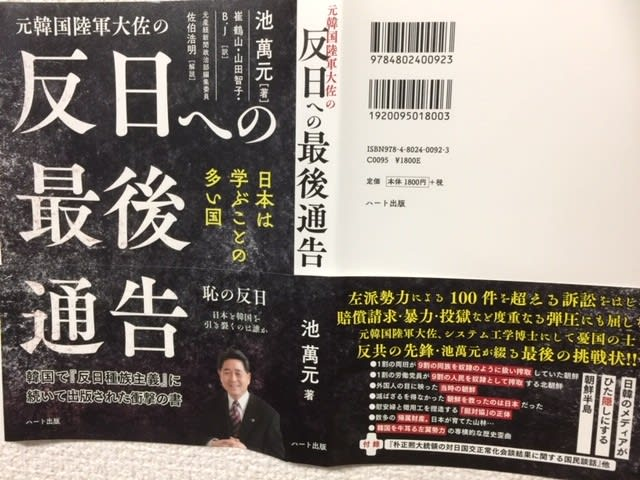
The following text is from The Final Warning Against Anti-Japanese Sentiment, a book by Ji Man-won, a former colonel in the Republic of Korea Army.
Emphasis in the text other than the headings is mine.
Women in the Joseon Dynasty Were in Effect Sexual Slaves of the Yangban
The two photographs on the next page show women and yangban at the end of the Joseon Dynasty.
They capture scenes of four yangban having a gisaeng girl of about nine or ten years old pour drinks for them at a drinking party, and of Korean women living without feeling sexual shame about exposing their breasts.
Female nobi (women of the slave class) in Joseon were also servants of male nobi (men of the slave class).
Hendrick Hamel, a Dutchman who observed Joseon in the 1660s, recorded that yangban families possessing political power owned as many as 2,000 to 3,000 nobi.
Women of the nobi class were all the property of the yangban and were also sexual slaves who could be used as the yangban wished.
All children they bore to yangban became nobi, but the yangban showed absolutely no interest in such children.
Meanwhile, romantic relationships between nobi were forbidden, and women who violated this prohibition were subjected to brutal torture and killed, although many nobi managed to evade the watchful eyes of the yangban and nurture romantic relationships.
For this reason, syphilis must have been prevalent not only among the yangban but also in the royal palace.
To escape syphilis, once a crown prince was selected, the royal family immediately had him marry a young girl.
But once the crown prince ascended the throne, all the beautiful court ladies in the flower garden that was the royal palace became his.
However, a court lady attractive enough to catch the king’s eye would likely already have had relations with other men and therefore have had a high probability of contracting syphilis, meaning that even the king could not remain free from syphilis.
Korean women were nobi who worked for the yangban without compensation and sexual slaves who gave themselves sexually to them.
Mun Ok-ju and more than twenty women from Daegu made love with Japanese soldiers.
They were able to bring home the fees and tips they received from Japanese servicemen and live lives freed from poverty, whereas the yangban of the Joseon period exploited women as nobi and sexual slaves and, far from paying them fees, did not hesitate to abuse them.
Incidentally, “power harassment” has recently become a social problem.
It is said that in some cases foreign workers are subjected not merely to power harassment but to hysterical abuse.
This probably derives to a considerable extent from Korean DNA.
Koreans criticize Japan for having been an imperialist state and hate the Rising Sun flag as a symbol of imperialism, but when we compare Joseon and Japan in this way, we cannot help questioning whether Koreans are really qualified to criticize the Japanese.
Their habit of finding some pretext to blame Japan whenever something happens seems to leave them open to the accusation that they are spitting toward heaven.
China’s Atrocity: “Hwanhyangnyeo”
Throughout the five hundred years of the Joseon Dynasty, there stood a gate called Yeongeunmun in the western part of what is now Seoul, around the present-day Independence Gate.
It was a gate built in front of Mohwagwan, a facility for receiving envoys arriving from China, the suzerain state, and it was at this gate that the king of Joseon personally came out to welcome envoys arriving from China, the country of beneficence.
In 1896, the Independence Club demolished this gate and built Independence Gate in front of it, but two foundation stones have been designated Historic Site No. 33.
China’s tyranny at the time was extraordinary.
The gift that country most welcomed was tribute women, and it preferred the daughters of government officials to female slaves.
In the eighth year of King Taejong (1408), at a gathering to select young women to be sent to China, the daughter of Pyeongseong-gun, Jo Gyeon, twitched her mouth as though she had suffered a stroke; the daughter of Joseon vice minister Kim Cheon-seok shook her head violently from side to side and pretended to be insane; and the daughter of Yi Un-ro of the Office of Military Supplies pretended that her leg was disabled.
Enraged by this, the Chinese envoy Huang Yan had their fathers exiled and removed from office.
In Uijeongbu City, Gyeonggi Province, there is the “Tomb of Princess Uisun.”
Immediately after the Manchu invasion of Korea, China ordered that a tribute woman be selected from the royal family and presented.
When the seventeenth king, Hyojong, was troubled over this, Geumrim-gun of the royal family offered his daughter.
Hyojong was grateful, named the daughter Princess Uisun, and made her his own adopted daughter.
She became a concubine of Prince Rong of Qing China, but later became the concubine of the son of Prince Baiyang, and subsequently the concubine of Bole, a subordinate of the former prince.
When Bole died, she was left with nowhere to turn, but her father, Geumrim-gun, who had been dispatched to China as an envoy, earnestly petitioned for permission to bring her home.
After returning to her homeland, she was despised by those around her as a “hwanhyangnyeo,” a woman who had “defiled herself” for seven years in China, and she died in August 1662 at the young age of twenty-eight.
Every year in Uijeongbu City, a grand memorial ceremony organized by the city government is held.
For the participants, however, it is merely an event where makgeolli is served.
Women who had once been taken to China and returned after they were no longer of use were called “hwanhyangnyeo.”
The homeland for which they had yearned so deeply was not a homeland but hell.
The people of their hometowns called them “hwanhyangnyeo” and looked down on them.
The women who were forcibly taken away and suffered bitter hardships were not military comfort women, but hwanhyangnyeo.
Let us reconsider these two things: the hwanhyangnyeo created by China and the “sacred comfort women” created by communists.
Japanese military comfort women existed for less than eight years, from 1937 to 1945.
Mun Ok-ju received fees and tips and even became popular.
She saved money, bought a diamond ring and a crocodile-skin bag, lived in her own way quite happily, and remembered those days fondly even in old age.
In contrast, the countless tribute women taken to China as offerings over five hundred years had their very lives taken away from them forever.
The Comfort Women of Dongducheon
The history of prostitution has existed since the birth of humanity, regardless of country or society.
Prostitution also has systems.
There are licensed prostitution and private prostitution.
Under licensed prostitution, the state designates particular areas, thereby preventing prostitution from affecting ordinary households, and provides prostitutes with regular medical examinations and hygiene management, while private prostitution is conducted individually according to market principles in brothels, bars, and similar establishments.
In November 1947, the U.S. military government issued an “Ordinance Abolishing the Licensed Prostitution System,” abolishing Korea’s licensed prostitution system, which had operated for more than thirty years.
Prostitution was thus left to a private-prostitution system under free-market principles.
The private brothel districts flourishing around U.S. military garrisons were teeming with so-called “yanggongju” (“Western princesses,” or prostitutes serving Westerners).
There are even claims that their number exceeded one million.
From 1937 until August 1945, the Japanese military had the state look after the health of its servicemen and the health of comfort women and even strictly supervised the fees, whereas since entering Korea in September 1945, the U.S. military had left the prostitution issue to the yanggongju system.
To meet domestic sexual demand in Korea, the Park Chung-hee administration introduced a licensed prostitution system in 1961 and provided prostitutes with hygiene management and public-security services, but the Roh Moo-hyun administration abolished it without putting any countermeasures in place.
Then, on February 8, 2018, there was strange news.
The yanggongju of Dongducheon had filed a damages lawsuit against the government, and it was reported that a judge of the Seoul High Court hearing the case had newly defined them as the “comfort women of Dongducheon.”
Presiding Judge Lee Beom-gyun of the court’s 22nd Civil Division issued a ruling to the effect that the governments of the 1960s through the 1980s operated camp towns to strengthen the military alliance with the United States and earn foreign currency, and even had the women undergo training by prostitution brokers.
According to reports, 117 women who had engaged in prostitution at U.S. military bases sought damages from the state, and the judge ordered compensation of seven million won for those who had contracted sexually transmitted diseases, or three million won, to each of them.
The judge’s ruling effectively portrayed the Syngman Rhee, Park Chung-hee, and Chun Doo-hwan administrations as though they had been governments engaged in procuring prostitution, and was tantamount to regarding the U.S.-ROK alliance as a prostitution alliance and the Korean economy as a prostitution economy.
How many women had engaged in sexual transactions in U.S. military camp towns over more than thirty years?
As stated above, some estimates put the number at one million.
Of these, only 117 filed suit against the state.
If the state had played the role of a pimp, how much had it taken from the fees earned by the prostitutes?
The women are said to have cheered this ruling, but what was it that pleased them?
Was it the amount of compensation, their honor, or the fact that the Syngman Rhee, Park Chung-hee, and Chun Doo-hwan administrations had been branded as pimps, the U.S.-ROK alliance defined as a prostitution alliance, and the Korean economy defined as a prostitution economy?
If it was the latter, I have the feeling that the lawsuit was not brought according to the wishes of the “comfort women of Dongducheon” themselves.
The Ruling That Recognized the U.S.-ROK Alliance as a Prostitution Alliance
The term “U.S. military comfort women,” born at the Seoul High Court in February 2018, is a political product based on anti-American and anti-state ideology.
It was deliberately created to drive Syngman Rhee, Park Chung-hee, Chun Doo-hwan, Korea, and the United States into difficulty all at once, but ironically, by doing so, they ended up tightening the noose around their own necks.
That is because, unexpectedly, they taught many citizens who had not known the secret story behind the birth of Japanese military comfort women that those Dongducheon comfort women and Japanese military comfort women were essentially the same.
The High Court ruling resulted in exposing in broad daylight the true nature of the Japanese military comfort women, who had been deified with a beautiful and noble image.
The only difference between Japanese military comfort women and U.S. military comfort women, it said, was whether the employer was the Japanese government or the governments of Syngman Rhee, Park Chung-hee, and Chun Doo-hwan.
For the Dongducheon comfort women, there was neither a fee schedule setting the prices nor written regulations.
There was no U.S. military command-level order establishing the rights and fees of the “yanggongju,” nor did successive Korean governments create one.
It can be said that both the Korean government and the U.S. military authorities left the women alone and entrusted matters to the “market economy system.”
In contrast, the Empire of Japan introduced the comfort-women system in order to protect women in ordinary households from rape by Japanese soldiers and thereby preserve the dignity of the nation.
In the aforementioned trial, Judge Lee Beom-gyun concluded that the Syngman Rhee, Park Chung-hee, and Chun Doo-hwan administrations themselves trained yanggongju and provided them to the U.S. military as a means of keeping American forces in Korea while simultaneously earning dollars for economic development, and that these women were unfortunate victims of the Korean government.
Korea’s self-proclaimed human-rights advocates, who sanctify Japanese military comfort women, say absolutely nothing about Japanese military comfort women from Japan, China, Taiwan, Thailand, Burma, or even the Netherlands.
Nor have they ever spoken about the fact that Korean women received more favorable treatment than women from those countries.
I think it is time they did.
If they claim that, while serving as the same Japanese military comfort women, comfort women from other countries received favorable treatment whereas only those from the Korean Peninsula were treated poorly, they should be able to explain the reason for that, but they have not done so either.